

AI Voice Assistant Development in 2026: How to Get a Production-ready Voice Agent 10x Faster [No-Code Guide]

TL;DR
Problem: Most businesses no longer need a fragmented AI voice infrastructure because it requires too much time and investment. Older voice assistants relied on separate STT, TTS, orchestration, and NLP layers, leading to latency, high development costs, and slow deployment.
Shift: Native Audio LLMs combine real-time voice understanding, conversational reasoning, and response generation into a single system, accelerating AI voice assistant development and enabling much more cost-effective development and deployment.
Fix: No-code platforms like AssistifAI now help businesses deploy production-ready voice AI agents without large engineering teams or 6 months off your calendar.
Why Did Traditional Voice Assistant Development Become a Problem?
Traditional voice assistant development was too fragmented for most businesses. Teams had to manage speech recognition, language understanding, dialogue orchestration, APIs, and voice synthesis separately.
That approach looked impressive in demos. Production environments exposed the problems quickly.
Common friction points included:
- Long implementation cycles
- High infrastructure costs
- Poor response latency
- Broken conversation flows
- Difficult integrations
- Constant prompt tuning
- Heavy developer dependency
A simple customer interruption could break entire workflows.
Healthcare clinics, dental offices, and insurance providers often faced this problem. Missed context during appointment scheduling or claims discussions created poor customer experiences and operational delays.
Why Has AI Voice Assistant Development Changed So Much by 2026?
AI voice assistant development became simpler because the technology stack stopped fighting itself. Older systems relied on multiple disconnected tools, leading to delays, broken conversations, and constant maintenance.
Most businesses did not fail because voice AI was impossible. They failed because the infrastructure was exhausting to manage.
Key shifts that changed the market:
- Native Audio LLMs reduced infrastructure complexity.
- Real-time speech processing improved response speed.
- Context memory became more reliable.
- Interruptions and turn-taking improved.
- No-code deployment workflows have matured.
- Voice orchestration became easier to manage.
The use of conversational AI continues to grow because businesses now prioritize operational efficiency and customer response speed over experimental AI projects. (Gartner)
What Are Native Audio LLMs and Why Did They Change Voice AI Development?
Native Audio LLMs unify multiple AI layers into a single workflow:
After analyzing the above table, we can infer that the use of older voice systems introduces latency and failure points. While Native Audio LLMs simplified the workflow.
The result:
- Faster interactions
- Lower infrastructure overhead
- Simpler deployment
- Better conversational flow
- Reduced engineering dependency
This unified workflow enables faster development of AI voice assistants and real-time voice agents. That’s why businesses can now launch production voice agents much faster than before.
How Did Native Audio LLMs Make Production Voice Agents 10x Faster?
Native Audio LLMs made production voice agents faster by reducing the number of systems businesses needed to manage. Development teams no longer had to manually stitch together multiple AI services.
The speed improvement came from operational simplification.
Before 2026, businesses often needed separate workflows for:
- Speech recognition
- NLP orchestration
- Dialogue management
- Voice synthesis
- Integration logic
- Monitoring systems
Modern voice AI workflows compress these layers into unified systems.
The biggest improvements include:
- Faster prototyping
- Real-time conversational testing
- Lower latency
- Fewer integrations
- Reduced maintenance overhead
- Faster production deployment
A dental clinic, for example, no longer needs a custom-built appointment voice pipeline. Modern no-code AI voice systems can manage bookings, reminders, cancellations, and FAQs using prebuilt conversational workflows.
That dramatically reduces production time and enables faster launch of voice agents without building a dedicated AI infrastructure team.
Why Are No-Code Voice Agents Replacing Traditional Voice Assistants?
No-code voice agents are replacing custom development because most businesses prioritize operational outcomes over infrastructure architecture.
Founders want:
- Faster customer response times
- More booked appointments
- Lower support costs
- Better lead qualification
- 24/7 availability
They do not want six months of backend voice pipeline engineering.
This is especially true for SMBs and operational teams that cannot justify enterprise-level AI development budgets.
No-code platforms reduce friction by handling:
- Voice workflows
- Real-time orchestration
- Integrations
- Deployment infrastructure
- Optimization workflows
- Voice interaction management
The market is shifting from “build everything” to “launch quickly and improve continuously.”
That is the same transition SaaS products went through years ago.
How Does AssistifAI Fit Into This Shift?
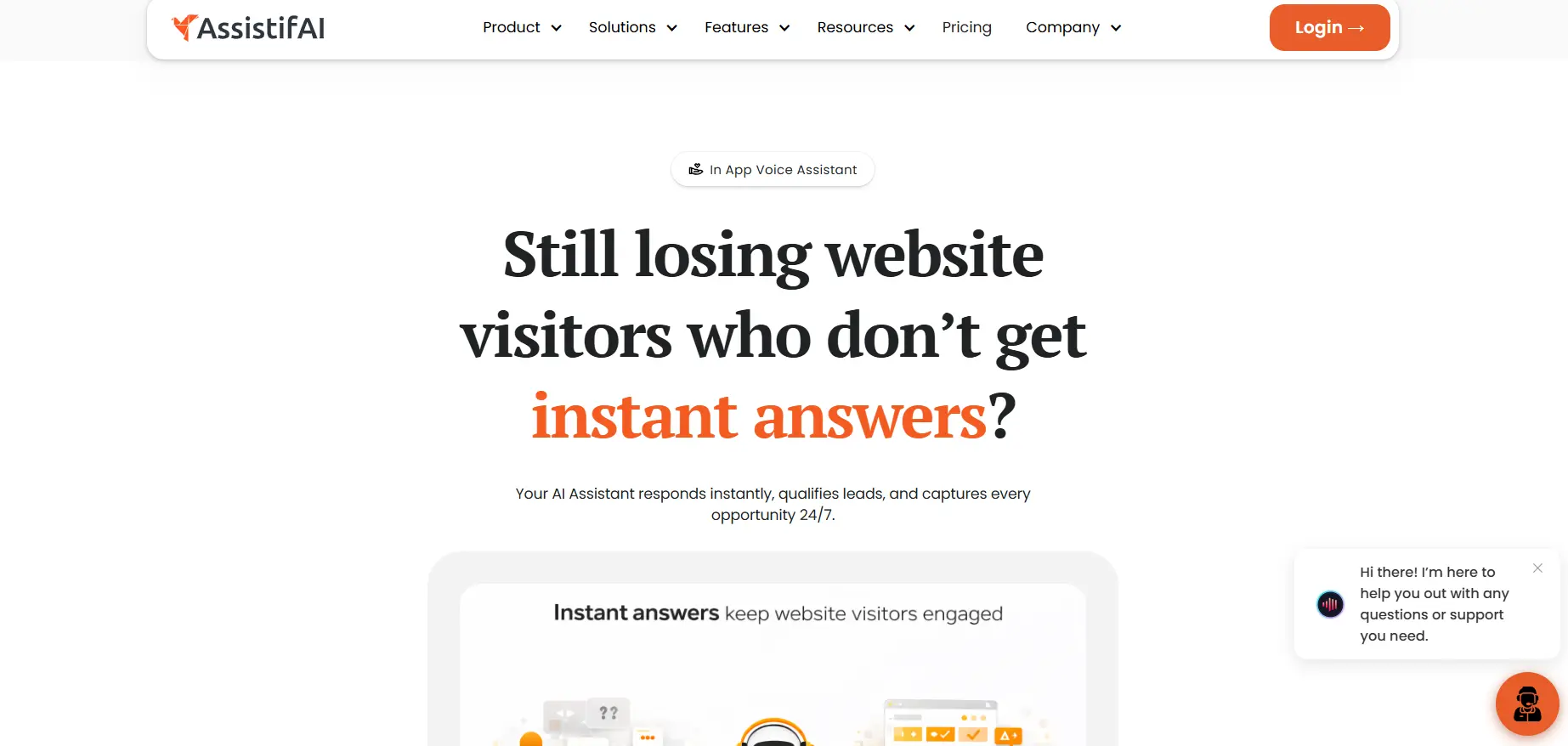
AssistifAI is a no-code AI platform built for businesses that want production-ready AI voice workflows without having to manage complex infrastructure.
The platform focuses on operational simplicity instead of forcing companies into long AI development cycles.
Businesses can use it to:
- Build AI voice assistants without heavy coding
- Automate inbound customer conversations
- Deploy voice workflows faster
- Improve response consistency
- Support real-time customer engagement
This matters most for operational teams that need working systems quickly, not experimental AI projects.
The biggest shift in 2026 is not that voice AI became smarter. It is that businesses can finally deploy it without having to rebuild the entire stack themselves.
What Mistakes Should Businesses Avoid With AI Voice Assistant Development?
Many businesses still approach voice AI as a research experiment rather than an operational tool.
That creates unnecessary complexity.
Common mistakes include:
- Overengineering workflows
- Building custom infrastructure too early
- Ignoring latency problems
- Creating robotic conversation flows
- Skipping real-world testing
- Focusing on features instead of outcomes
The strongest AI voice assistants solve narrow operational problems first.
Simple workflows usually scale better than complicated ones.
Conclusion
AI voice assistant development in 2026 looks very different from what it did just a few years ago. Native Audio LLMs removed technical complexities that slowed older voice systems.
Businesses no longer need fragmented pipelines for speech recognition, orchestration, and voice generation. They need reliable workflows that improve response times, reduce manual work, and scale customer interactions without growing operational overhead.
That is why no-code voice agents are replacing traditional custom development models.
If businesses want to launch faster without building everything internally, platforms like AssistifAI are becoming the practical path forward.
FAQs
What are Native Audio LLMs?
Native Audio LLMs are AI models that process speech, support conversational reasoning, and enable voice generation in a single real-time system, rather than relying on separate speech pipelines.
Why did Native Audio LLMs improve AI voice assistant development?
They reduced latency, simplified infrastructure, improved conversational flow, and removed many of the orchestration layers required in older voice systems.
Why are no-code voice agents becoming popular?
No-code voice agents reduce engineering complexity and deployment time. Businesses can launch AI voice workflows faster without building custom infrastructure from scratch.
What industries benefit most from AI voice assistants?
Healthcare, dental clinics, SaaS companies, legal firms, insurance providers, hospitality businesses, real estate agencies, and e-commerce brands benefit heavily from voice automation.
Are custom AI voice stacks still necessary in 2026?
Some enterprise use cases still require custom infrastructure. Most SMBs and operational teams, however, can now use no-code platforms more efficiently.
How can businesses start using AI voice assistants quickly?
Businesses can start by identifying repetitive customer communication workflows and deploying a no-code AI voice assistant platform, such as AssistifAI, to automate them.

Read More Blogs

Your next hire isn't human.


AssistifAI automates your workflows and delivers exceptional voice and chat-based customer support helping your business grow faster, save time, impress clients, and stay ahead of the competition.