
AI for Scheduling in 2026: How Artificial Intelligence is Transforming Appointment Management?
Why is AI for Scheduling a Business Problem, Not Just a Tech Trend?
You might not notice scheduling issues right away, but they can sneak up on you when you look at the numbers. Missing one appointment might seem like no big deal, but if you miss ten in a week, that's a big problem!
When people don't show up for their appointments, small businesses like clinics, legal firms, HVAC companies, and salons can lose about $200 each time.
Usually, these businesses have people missing their appointments 18% to 30% of the time. This means they could lose between $50,000 and $150,000 every year due to no-shows. (Intelibot, 2026).
Before you even think about all the time workers spend calling people to remind them, confirm their appointments, or reschedule, there's more to consider.
It's not just about having an empty spot. It's like a domino effect: workers waste time getting ready for nothing, spots that could have been given to people waiting are left open, and customers start to lose trust because everything seems messy.
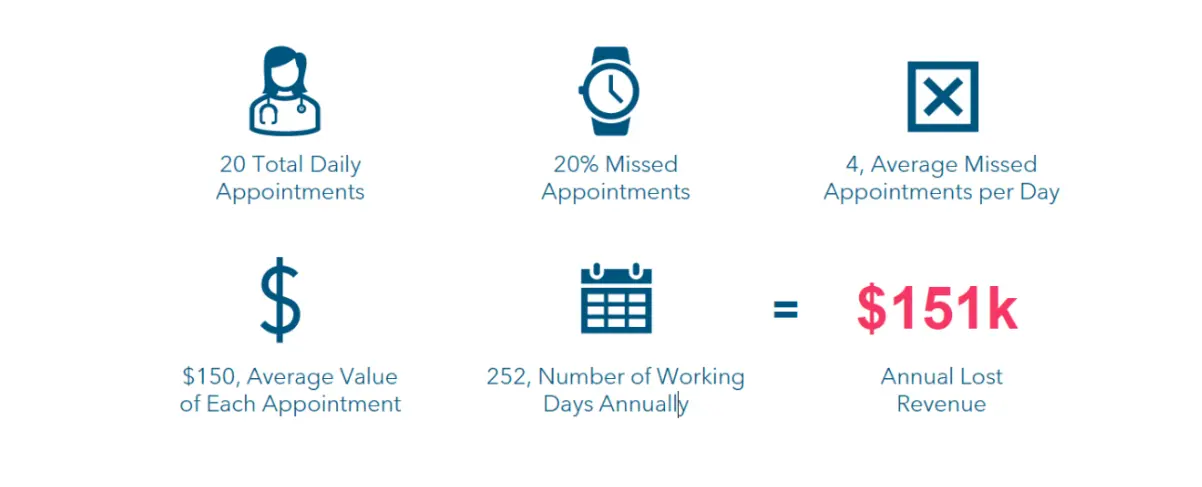
- The no-show rate is 30% in some industries, according to Intelibot (2026).
- $150 billion is what missed appointments cost the healthcare system annually.
- 40% of appointments are booked after business hours, meaning without AI, you're missing those bookings entirely.
AI for scheduling fixes this at the root, not the symptom.
What is AI Appointment Scheduling, and how is it different from basic Online Booking?
AI appointment scheduling is a system that uses machine learning and natural language processing to manage the full booking lifecycle, from initial booking through reminders, rescheduling, and post-appointment follow-up, without human intervention.
When a basic booking page takes a slot and sends a calendar invite, AI scheduling does something fundamentally different: it learns. It identifies which customers are likely to cancel, adjusts reminder frequency for high-risk bookings, fills cancellation gaps with waitlisted clients, and syncs everything in real time across your CRM, calendar, and communication channels.
Think of the difference like this: a basic booking tool is a receptionist who writes things in a diary. An AI scheduling assistant is a receptionist who also reads behavioral and psychological patterns, predicts problems before they happen, and handles 40 calls simultaneously, even at 2 AM on a Sunday.
Key features of a genuine AI scheduling assistant:
- Predictive no-show modeling: Assigns risk scores to individual bookings using historical behavior data.
- Automated multi-channel reminders: SMS, email, and voice, timed based on what actually works for each customer.
- Natural language booking: Customers type or say "book me in next Thursday afternoon," and the system handles the rest.
- Waitlist automation: When a cancellation becomes available, the next person is notified immediately.
- CRM and calendar sync: Every booking, change, and cancellation reflects across all connected tools in real time.
Beyond the Buzzword: The Mechanics of AI Scheduling
AI scheduling works by combining three technologies: natural language processing (NLP) to understand booking requests, machine learning to predict behavior and optimize slot allocation, and integration APIs to sync with your existing tools.
Just think like this. A customer messages your business at 11 PM: "Can I get the 10 AM slot on Friday?" The NLP layer reads the intent, checks real-time availability, confirms the booking, and fires a confirmation. No human touches it.
Meanwhile, behind the scenes, the machine learning model has already flagged this customer as a moderate no-show risk based on their last booking history. It schedules an extra reminder 24 hours out, and a confirmation request 2 hours before. If they don't confirm, the system automatically reaches out to the next person on the waitlist.
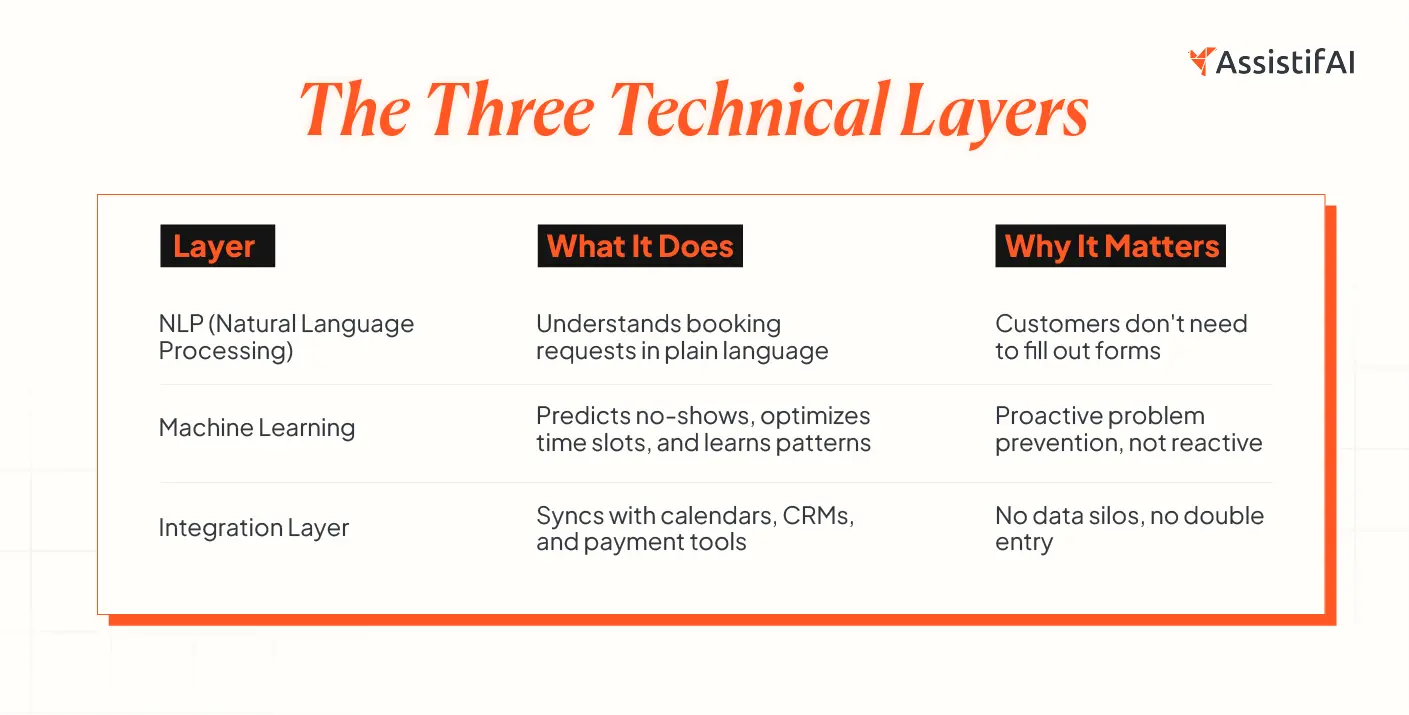
The best AI scheduling assistant, like AssistifAI, combines all three without requiring a technical team to configure them.
Which Industries are getting the most value from AI Scheduling in 2026?
It can be any business that runs on appointments that benefits from AI scheduling. The industries seeing the fastest and most measurable ROI are healthcare, legal, and professional services.
Healthcare and Clinics
Healthcare has the most at stake. The numbers are not subtle: missed appointments cost the U.S. healthcare system over $150 billion annually, and outpatient no-show rates average 18.8%. One clinic using AI-driven scheduling saw completion rates for high-risk appointments jump from 11% to 36%: that's not a marginal improvement, that's a rescue.
- AI matches patients to the right provider based on condition, not just availability.
- Post-appointment follow-ups trigger automatically, reducing readmission risk.
- Waitlist management fills gaps in under 10 minutes instead of staff spending an hour on calls.
Legal Firms
Law firms deal with a specific version of this problem: new client intake. Missing a first consultation means losing a client permanently, not just rescheduling them. AI scheduling handles after-hours intake calls, qualifies the client, and books the consultation, all before a lawyer sees the request the next morning.
Startups and SMBs
This is where the ROI argument is often strongest. Small teams cannot afford a dedicated scheduler. An AI scheduling helper grants a 5-person enterprise the booking framework of a 50-person one, without the staffing expense.
How Do You Choose the Right AI Scheduling Tool for Your Business?
Choose an AI scheduling tool based on three non-negotiables: integration depth, no-show reduction capability, and ease of deployment. Everything else is secondary.
Here's the honest filter. Most tools will claim they do everything. The ones worth using prove it with specific numbers, no-show reduction percentages, implementation timelines, and real case studies. If a vendor can't tell you what percentage improvement their existing customers see in no-show rates, say goodbye.
What to evaluate before you sign on to anything:
- Integration depth: Does it sync natively with your calendar (Google, Outlook), CRM, and payment tool? Or does it require a clunky middleware setup?
- Predictive capability: Does it actually assign risk scores to bookings, or does it just send generic reminders?
- Channel coverage: Can customers book via SMS, web chat, voice, and email — not just one channel?
- Deployment speed: How long from purchase to live? If it takes 3 months to set up, you're losing revenue during implementation.
AssistifAI is built specifically for SMBs and service businesses that need this to run fast without a technical implementation team. Worth looking at before you commit to a heavier enterprise platform.
Red flags to watch for:
- No trial period or pilot option.
- Pricing that hides per-seat or per-booking fees in the fine print.
- No data on the actual no-show reduction from existing customers.
- Requires you to remove your existing CRM to use it.
What Does the Future of AI Scheduling Look Like Beyond 2026?
The next phase of AI scheduling isn't just smarter reminders. It's agentic: AI that negotiates, reschedules, and fills slots without any human prompt.
A few directions that are already emerging and will define the space over the next two years:
- Voice-first booking: customers book by speaking, not typing. Smart voice assistants handle the full conversation, including FAQs, service selection, and payment.
- Predictive slot optimization: AI doesn't just fill slots, it reshapes your schedule based on demand forecasting. Peak hours get protected. Low-demand windows get incentivized pricing.
- Sentiment-aware reminders: The system detects a frustrated tone in a reply and escalates the issue to a human rather than sending another automated message.
- Cross-platform identity: The AI recognizes the same customer across phone, chat, email, and web, creating a single booking history without the customer having to repeat themselves.
The businesses that will benefit most from these changes are the ones building their scheduling infrastructure now.
Why AssistifAI is Built for Appointment Management?
Most businesses don't have a scheduling problem. They have a fragmentation problem. One tool handles bookings. Another sends reminders, a third logs customer conversations. A fourth tries to analyze what went wrong. None of them talk to each other, and your team spends half its day stitching the gaps together manually.
AssistifAI is built to replace that fragmentation entirely. It's an all-in-one AI workforce platform that lets businesses deploy production-ready AI assistants in under 2 minutes without code, technical expertise, or a drag-and-drop builder. You go from "we need to fix our scheduling" to live, automated appointment management faster than most tools take to onboard you.
But here's what sets it apart from every other scheduling tool on this list: Keeper.
Most AI scheduling platforms give you chat transcripts and basic analytics. Keeper, AssistifAI's built-in conversation intelligence layer, does something entirely different.
It monitors every conversation across every channel, not to log them, but to surface what actually matters: at-risk customers, unresolved issues, escalation requests, behavioral patterns, and recommended next-best actions. You get 100% conversation coverage with zero missed issues, and zero need for a separate analytics platform to make sense of it.
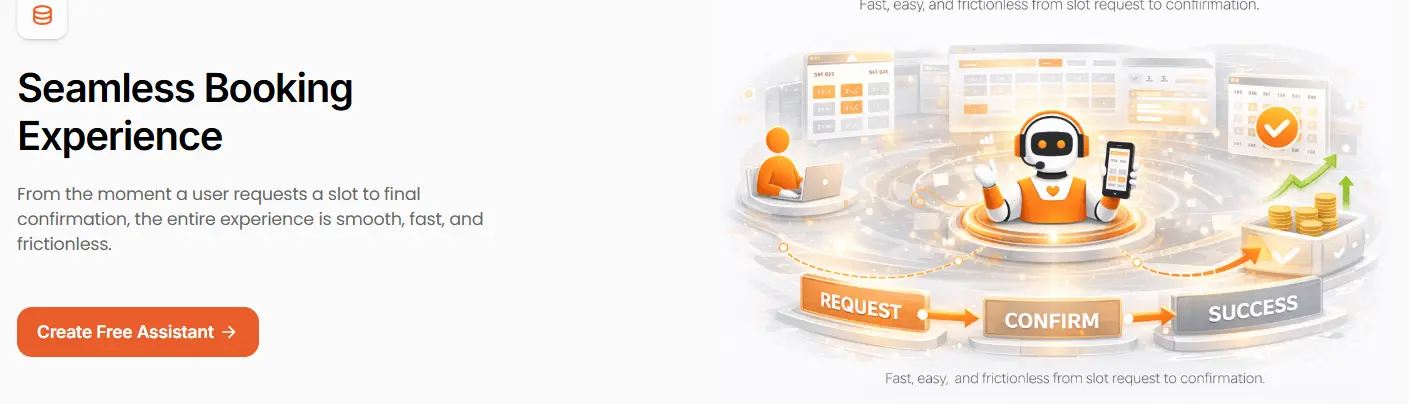
Think about what that means for appointment management specifically. You don't just know that a customer canceled, you know why, whether it's a pattern, and what the right follow-up action is. That's the difference between a normal scheduling tool and an intelligent system.
Wrapping Up
If your business runs on appointments, you are losing money in empty time slots every single day. An AI scheduling assistant in 2026 is not a future investment; it's a needed one in the present.
AssistifAI replaces the old model of fragmented, menu-driven chatbots that force customers through decision trees and frustrate them before they ever book.
Instead, it gives every customer interaction a unified, intelligent copilot that handles scheduling, answers questions, escalates when needed, and learns from every conversation across all channels, simultaneously.
The math is not complicated. Fewer no-shows means more revenue from the capacity you already have. Less manual scheduling means staff are focused on work that actually requires a human. And a system that monitors every customer interaction means problems get caught before they become cancellations.
The tools exist. The ROI data is real. What's left is picking the one that actually replaces fragmentation, not adds to it.
See how AssistifAI transforms appointment scheduling for your business.
FAQs
What is AI appointment scheduling, and how is it different from a basic booking tool?
AI appointment scheduling uses machine learning and NLP to manage the full booking lifecycle, including automatic prediction, reminders, rescheduling, and waitlist management. A basic booking tool just takes a slot and sends a simple calendar invite. AI scheduling learns from behavior and acts before problems happen, not after.
How much can AI scheduling actually reduce no-shows?
Most businesses see no-show reductions between 20% and 40% within the first few months of implementation. One dental practice reduced its rate from 18% to 11% in six months, recovering $180,000 in annual revenue. Healthcare organizations using predictive AI models report over 90% accuracy in identifying high-risk appointments.
Is AI scheduling only for large businesses with technical teams?
No. Some of the fastest ROI cases come from small businesses and solo practices. Modern AI scheduling tools like AssistifAI are built specifically for teams without a dedicated IT function. Most can be operational within days, not months.
How does AI scheduling handle after-hours bookings?
This is one of its clearest advantages. Since 40% of appointments are booked outside business hours, a system that only works 9-to-5 is missing nearly half its potential bookings. AI scheduling operates 24/7, capturing requests, confirming bookings, and handling rescheduling, whether your team is in or not.
What should I look for when comparing AI scheduling vendors?
Focus on three things: integration depth (does it actually talk to your CRM and calendar?), proven no-show reduction data from existing customers, and deployment speed. Avoid any vendor that can't give you a specific percentage improvement from real clients, or that requires months of setup before you go live.
Can AI scheduling integrate with tools I already use?
Yes, most modern AI scheduling tools integrate with Google Calendar, Outlook, Office 365, Salesforce, HubSpot, and major CRM platforms. The key is to ask specifically how deep the integration goes. A native sync is very different from a one-way data export that requires manual review.

Read More Blogs

Your next hire isn't human.


AssistifAI automates your workflows and delivers exceptional voice and chat-based customer support helping your business grow faster, save time, impress clients, and stay ahead of the competition.