

AI Scheduling Assistant: How to Fill Your Calendar 24/7 Without Hiring More Staff
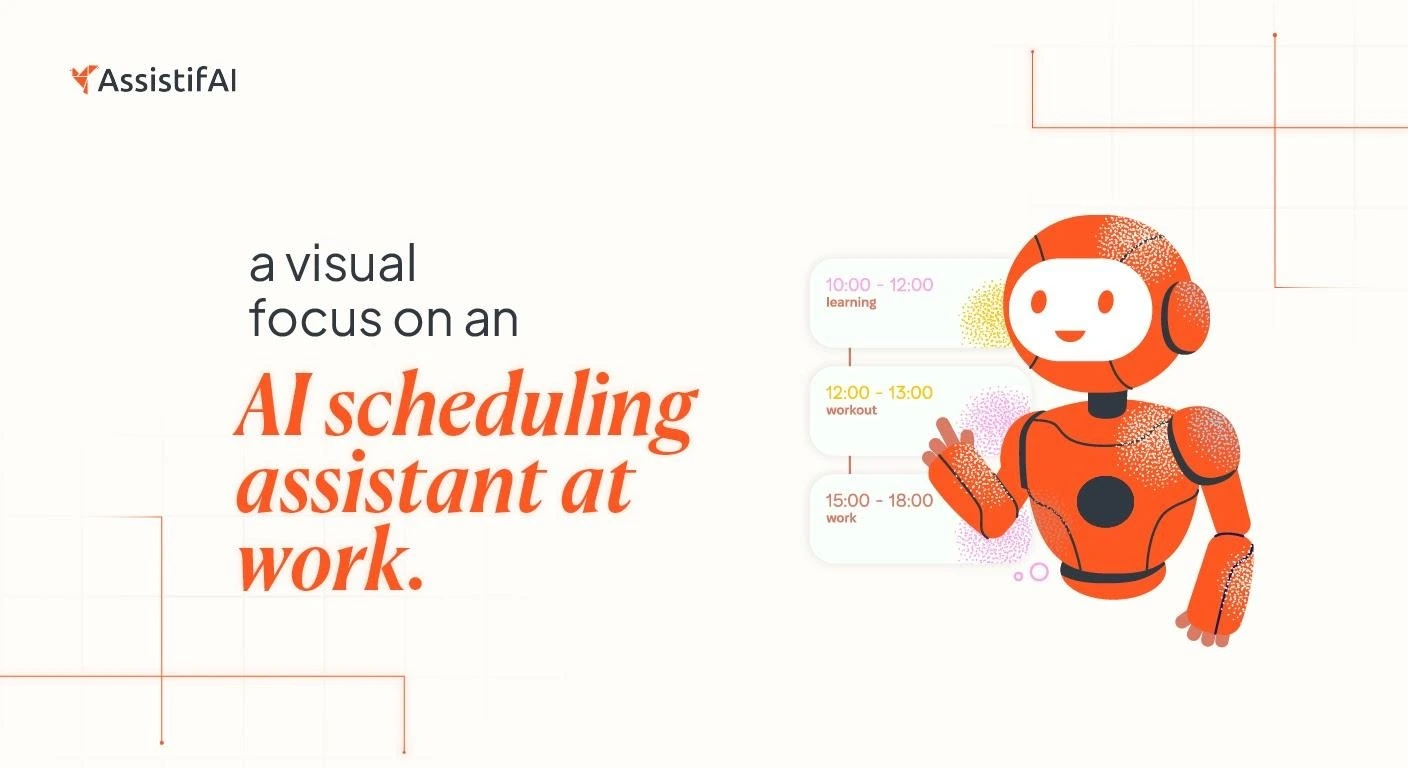
For businesses, speed to lead is the only metric that truly dictates revenue. If a prospect reaches out and has to wait six hours for a manual email response to book a demo, they have already moved on to a competitor.
Traditionally, solving this problem meant hiring a virtual assistant or a front-desk coordinator, an expensive solution, limited by time zones, and prone to human error.
An AI scheduling assistant isn't just a "Calendly link" sent via email. It is a sophisticated AI agent capable of holding a conversation, understanding intent, and negotiating times directly within a chat window or over a voice call.
For SMBs and medium-sized enterprises, this technology is the difference between a stagnant pipeline and a calendar that stays booked while the leadership team sleeps.
TL;DR: Stop Losing Revenue to Manual Booking
- The Problem: Most businesses lose 20+ hours per week to manual scheduling and miss leads who reach out after hours.
- The Fix: Deploy an AI assistant to handle inbound calls and web chats that sync directly to your calendar.
- Why AssistifAI: It combines voice and chat in one place and deploys in 2 minutes, reducing support costs by 43%.
The Cost of the Manual Scheduling Gap
High-growth businesses in North America face a specific bottleneck. When a prospect is ready to book, any delay in response increases the likelihood that they will find a competitor.
Static booking links were the first attempt at a solution, but they are passive tools. If a client has a question about insurance coverage or specific service details before booking, a link cannot answer. This friction leads to abandoned carts and empty calendar slots.
The AI scheduling assistant fills this gap by acting as a proactive team member. It doesn't just provide a link; it conducts the conversation, qualifies the lead, and secures the time slot.
What an AI Scheduling Assistant Actually Does
An AI scheduling assistant does more than display available time slots. A well-built one handles the entire lifecycle of an appointment:
- Availability detection: checks your calendar in real time, eliminates conflicts, and offers slots based on actual capacity.
- Conversational booking: lets customers book through natural language via voice, chat, or phone.
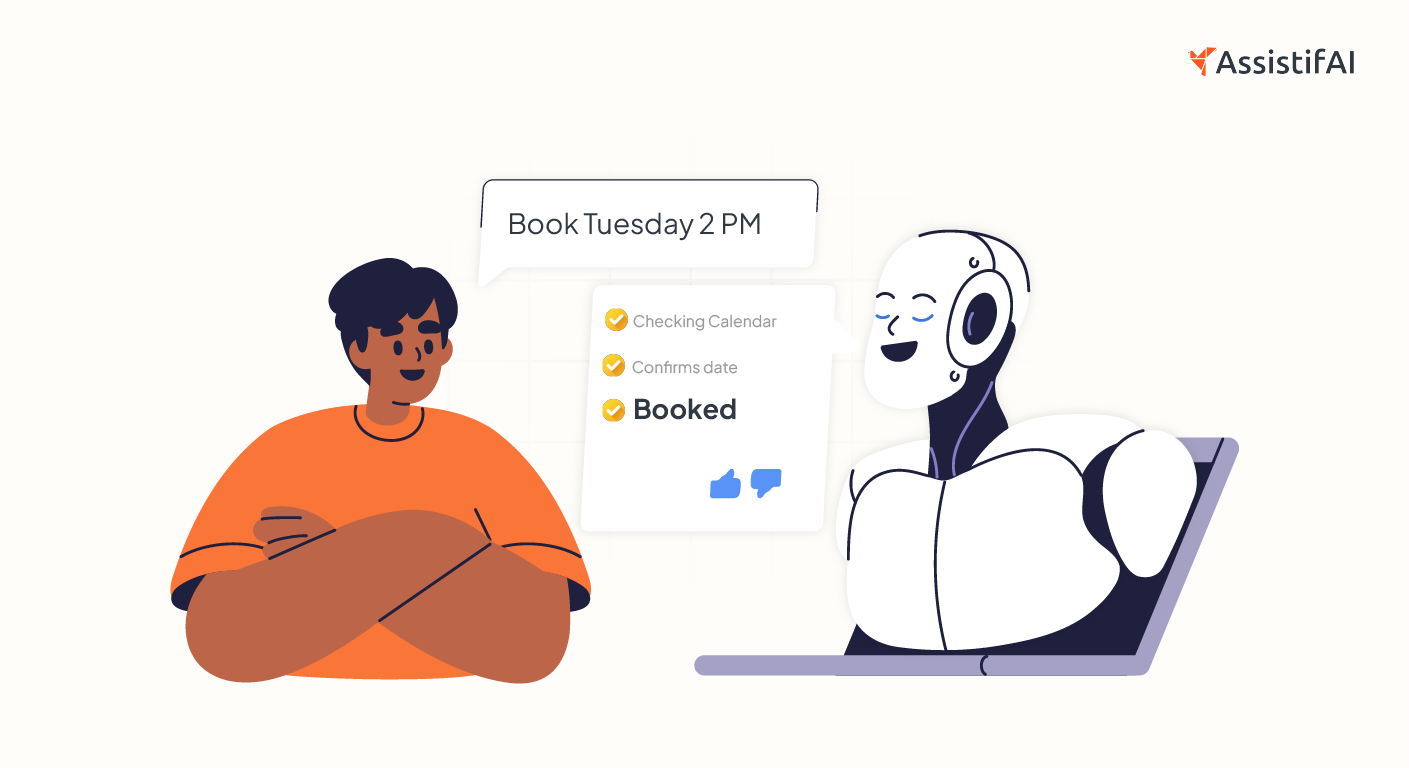
- Confirmation and reminders: sends automated confirmations and follow-up reminders to cut no-show rates
- Rescheduling and cancellations: handles changes without pulling in a human agent
- Third-party sync: connects with Google Calendar, Calendly, Cal.com, and similar tools so everything stays in one place
This is the baseline. The question is how deeply the scheduling system connects to the rest of your business operations.
Why Most AI Scheduling Tools Fall Short
The scheduling software market is crowded. Calendly, Acuity, and dozens of chatbot-based booking tools exist. So do AI voice platforms like Bland AI and Synthflow for outbound calling. But each of these solves one piece of the problem.
Here is what a fragmented stack looks like in practice:
The result is a business running three to five separate tools that do not share data with each other. A customer who books through a chatbot has a completely separate journey from one who calls in. No one has a full view of what is happening.
How AssistifAI Solves Scheduling Differently
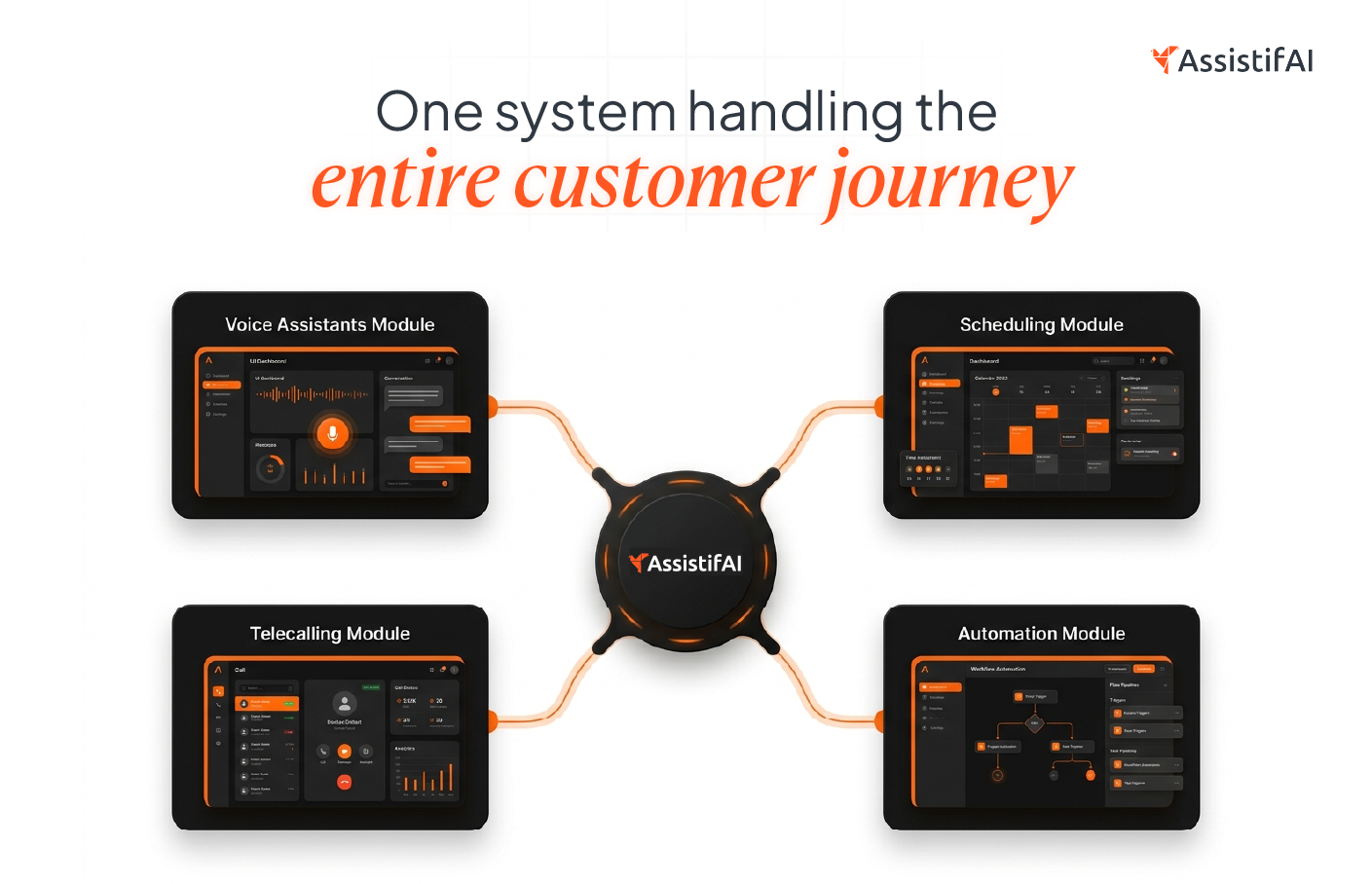
AssistifAI is not a scheduling tool with some AI layered on top. It is a unified AI platform where scheduling is one of six deeply integrated pillars, and that integration is what changes the outcome for businesses.
Scheduling as Part of a Complete Customer Journey
In AssistifAI, a single customer interaction flows through the platform like this:
- Voice Assistant: the customer asks a question on your website or app, in any of 38+ languages
- Scheduling: the AI checks availability and books the appointment in real time, with zero double-bookings
- Telecaller: an automated outbound call goes out before the appointment to confirm and remind
- Marketplace Agent: a document or intake agent sends pre-appointment forms via WhatsApp or email
- Keeper: the AI flags anything unusual from the conversation that a human should know about
- Human Partnership: your team sees the flagged items and takes action where needed
Every step is connected. The scheduling system knows what the voice assistant discussed. The telecaller knows what was booked. The keeper monitors the whole chain. No data is overlooked.
Voice-Driven Booking
Most scheduling tools require customers to click through a calendar widget. AssistifAI lets customers book entirely through natural conversation:
- "I want to schedule a meeting for next Tuesday at 2 PM." — done
- "Can you change my appointment from Thursday to Friday morning?" — done
- "Cancel my booking and let me know when you have done it." — done
This matters because voice is how people actually want to interact, especially on mobile. Removing the friction of a booking form increases conversion.
Zero Code, Immediate Deployment
Setting up scheduling automation in AssistifAI does not require a developer, API documentation, or a six-week integration project. Businesses connect their existing calendar tools, and the scheduling AI is live. For most teams, the process happens in under two minutes.
Compare that to a custom integration between a voice bot, a CRM, and Calendly, which typically costs $10,000 or more in developer time and takes months to stabilize.
Industries Where AI Scheduling Delivers the Most Impact
AI scheduling automation is not vertical-specific, but the returns are highest in businesses where missed appointments directly translate to lost revenue.
- Healthcare and Wellness
Clinics and wellness providers see 35-60% reductions in no-shows when automated voice reminders replace manual front-desk calls. AssistifAI's scheduling pillar connects directly to outbound telecalling, so reminder calls go out automatically without adding staff.
- Legal Services
Law firms receiving 50+ weekly inquiries cannot manually qualify and book every lead. AI scheduling, combined with a document intake agent, means high-value cases are booked and flagged instantly, without slipping through over the weekend.
- Real Estate
Property viewings booked 24/7, route-optimized for Saturday tours, with Keeper flagging high-intent leads who have viewed the same listing four or more times. The scheduling system does not just book; it feeds intelligence back to the sales team.
- Finance and Banking
Wealth advisors can use AI scheduling to handle booking requests made on Sunday evening that would otherwise sit until Monday. The finance agent pulls portfolio data, and the scheduler books the review meeting, all before the advisor starts their week.
- Education and EdTech
Universities managing thousands of admissions inquiries during enrollment season cannot scale their call centers fast enough. AI scheduling handles campus tour bookings and counselor meetings automatically, and telecaller agents follow up on incomplete applications.
Conclusion: Future-Proof Your Business
The gap between businesses that utilize an AI scheduling assistant and those that rely on manual labor is widening. By removing the friction of the "back-and-forth" email chain, you improve the customer experience and make the workplace more efficient.
AssistifAI doesn't just give you a tool; it gives you a workforce. With zero-code deployment, human-like voice interaction, and a dedicated partnership model, it is the only platform designed to scale with your business's complexity.
AssistifAI is the only platform where scheduling is part of a unified AI workforce, voice-first, outbound-capable, insight-driven, and deployable without a technical team. For SMBs and growing businesses in North America, that is not a marginal improvement. It is a structural advantage.
Ready to see your calendar fill up automatically?
Don't wait for your competition to automate first. Deploy your AI assistant in 2 minutes and start reclaiming your time today.
Frequently Asked Questions (FAQs)
1. What is an AI scheduling assistant?
An AI scheduling assistant makes appointments without any delay and keeps track of your calendar. It easily integrates with tools like Google Calendar, Calendly, and Outlook to make scheduling simple, stop double-bookings, and get rid of back-and-forth messages.
2. What is the best AI scheduling assistant?
The best AI scheduling assistant is one that aligns with your current calendar systems, like Google Calendar or Calendly, and makes it simple to book appointments. It should be able to schedule things correctly, stop double bookings, and give users a smooth experience without needing extra staff.
3. How does AI appointment scheduling work?
AI appointment scheduling uses algorithms to automatically set up meetings based on what times and preferences are already set. It works with your calendar, sends out invites, and makes changes or cancels events with little help from you.
4. Can an AI scheduling assistant prevent double-bookings?
Yes, an AI scheduling assistant can keep you from double-booking by checking your calendar and availability in real time. Before confirming appointments, it checks for conflicts to make sure your schedule stays organized and there are no overlaps.
5. How can AI help with scheduling appointments 24/7?
AI can track your calendar 24/7, so you can make appointments anytime. It talks directly to clients, so they can schedule meetings, change their schedules, or cancel appointments at any time without needing help from a person.
6. Why should I use an AI scheduling assistant for my business?
An AI scheduling assistant avoids the need for manual scheduling, which saves time and money. It makes scheduling appointments easier, more accurate, and more efficient, which boosts productivity and cuts down on unnecessary paperwork.

Read More Blogs
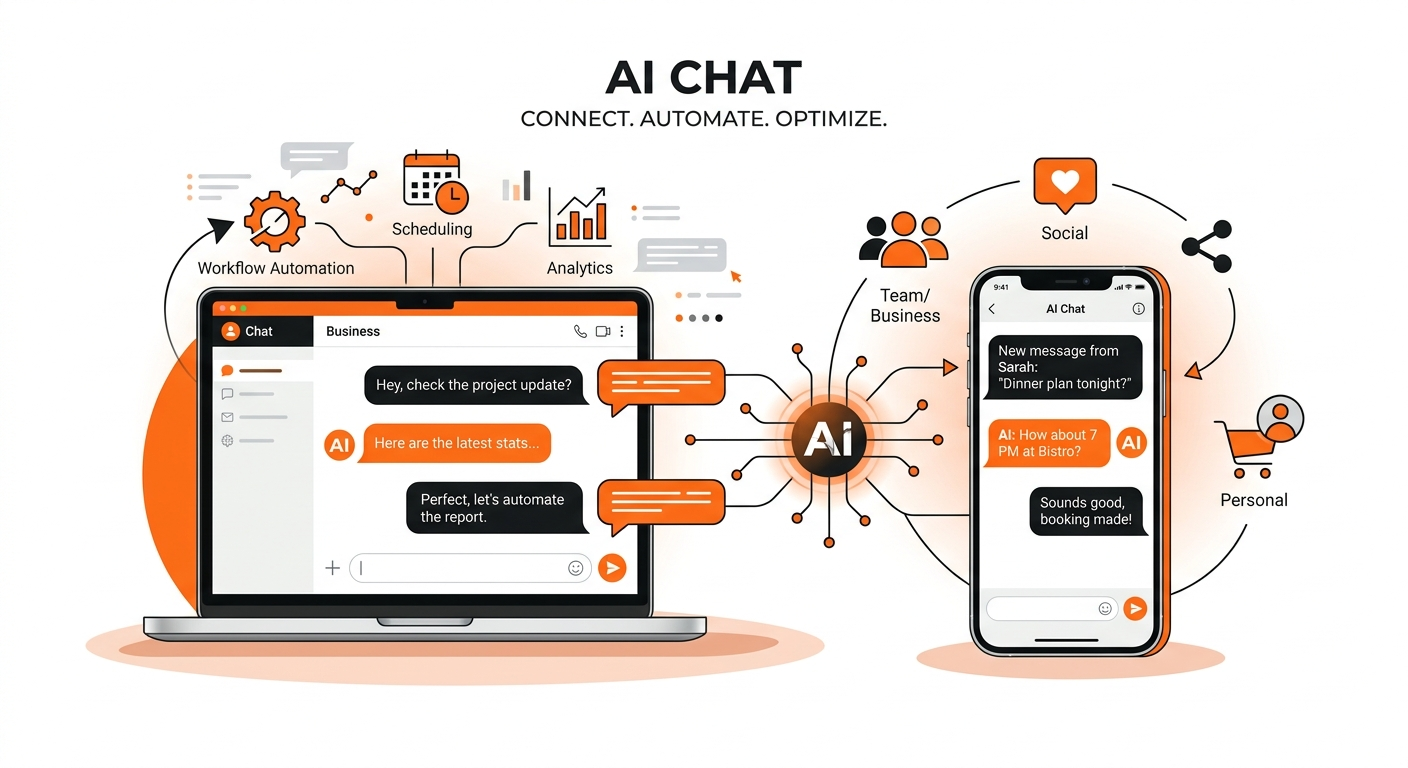

Your next hire isn't human.


AssistifAI automates your workflows and delivers exceptional voice and chat-based customer support helping your business grow faster, save time, impress clients, and stay ahead of the competition.