
AI Appointment Scheduling Software: How to Cut No-Shows by 60% and Recover Lost Revenue
TL;DR
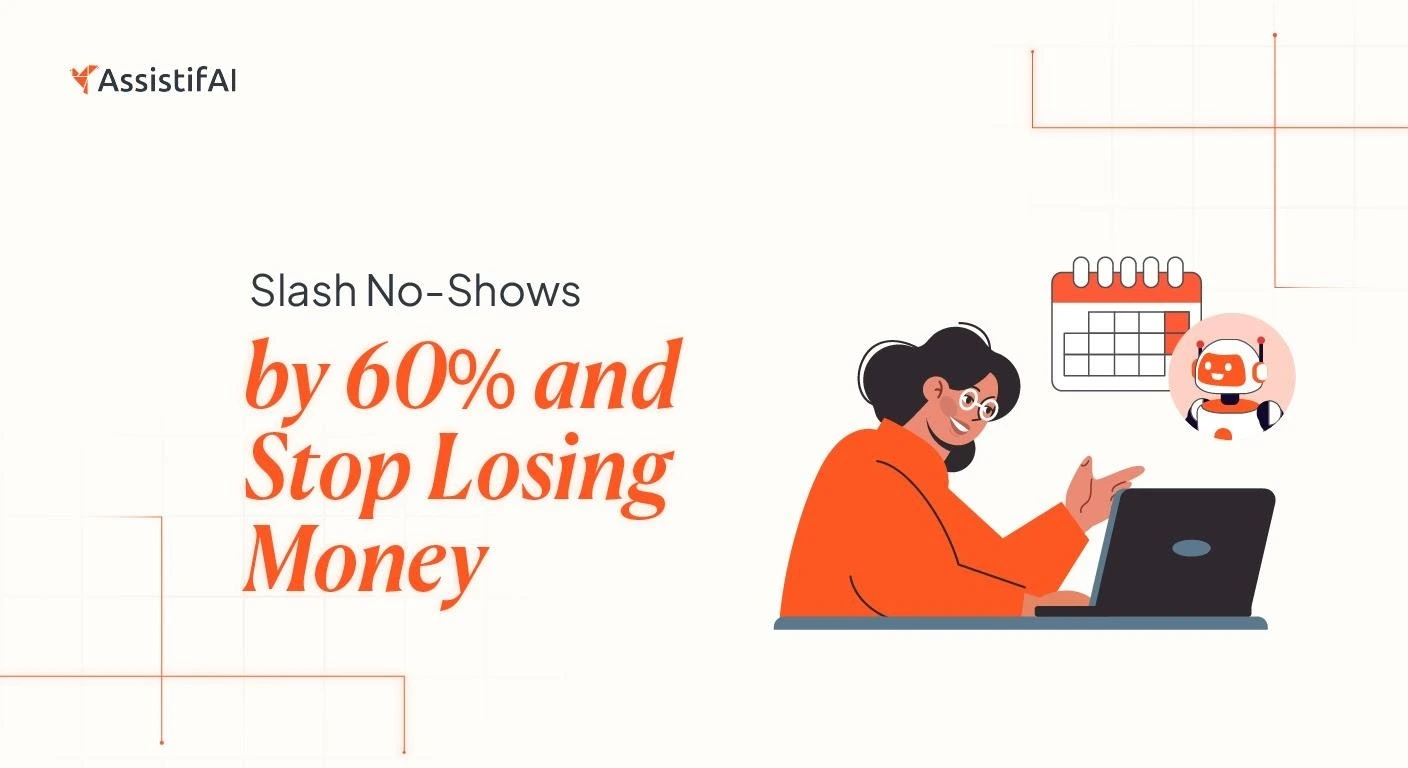
The problem: The average no-show rate across industries is 23%. One missed appointment costs roughly $200. Two no-shows a day add up to $50,000 in lost revenue per year, and most of it is preventable.
The shift: Static booking tools and manual reminders don't work. They rely on staff to follow up and clients to remember. Most don't.
The fix: AI appointment-scheduling software automates reminders across the right channels at the right time, flags high-risk bookings before they're missed, and automatically fills canceled slots. Businesses using both SMS and email reminders report show rates as high as 90% (Engageware, 2024).
The Hidden Revenue Leak: How No-Shows Are Costing You More Than You Think
No-show isn't a scheduling problem. It's a revenue problem, and most businesses are measuring it the wrong way.
Across industries, the average no-show rate sits at 23%, based on a review of 105 studies (Leibner et al., 2023). That means nearly 1 in 4 booked appointments never happen. For a business running 20 appointments a day, that's roughly 5 empty slots every single day.
Here's what those empty slots actually cost:
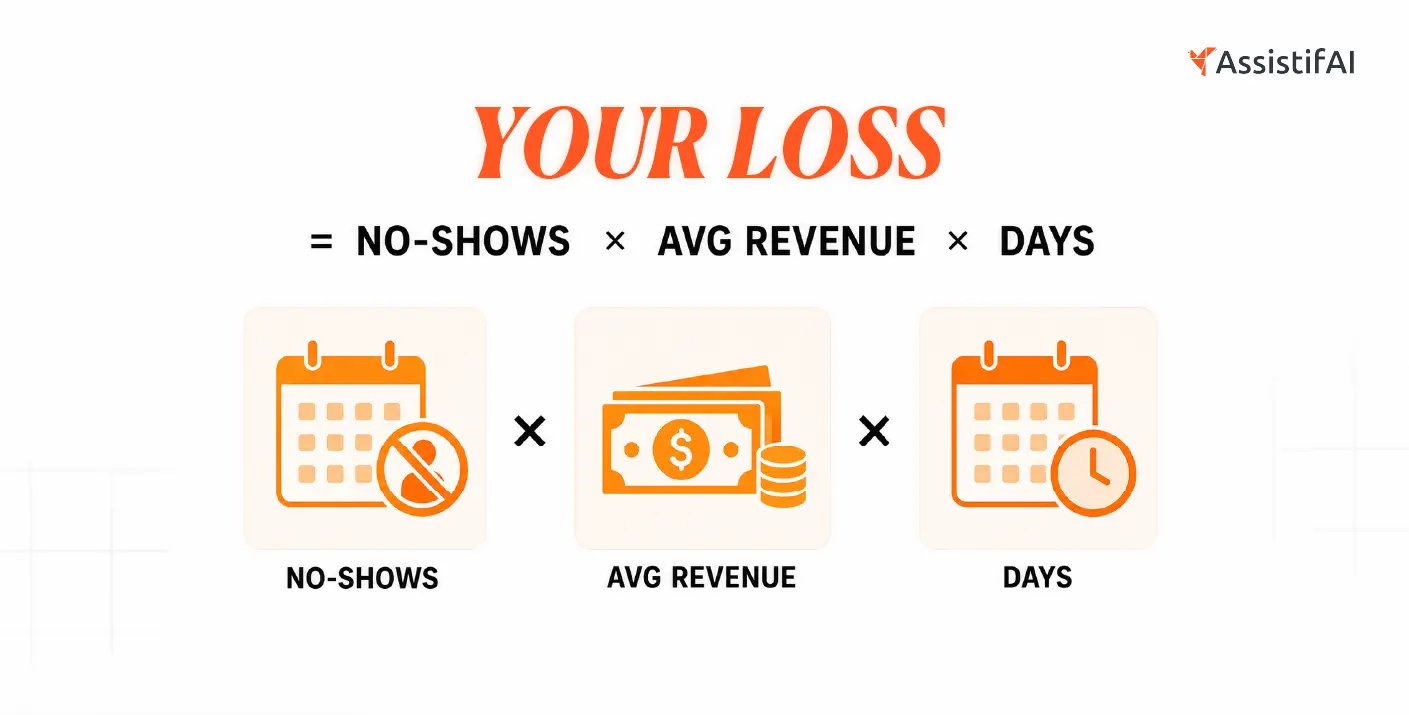
- Direct revenue loss: The average missed appointment costs ~$200. Two no-shows per day = $50,000+ in lost revenue annually.
- Staff idle time: Front desk staff spend time confirming, preparing, and waiting for no return.
- Fixed overhead doesn't pause: Rent, utilities, and salaries keep running whether the slot is filled or not.
- Missed conversion windows: A no-show in a sales consultation or demo is a pipeline leak, not just an empty calendar block
The part that hurts most: 37.6% of people missed their appointment simply because they forgot.
Not a scheduling conflict.
Not an emergency.
Life is busy, and they forgot. That's fully preventable with the right AI appointment-scheduling software.
The math is simple. $150 billion is lost annually to no-shows across US service businesses. The businesses recovering that revenue aren't doing anything heroic; they just stopped relying on clients to remember on their own.
Why Traditional Scheduling Fails to Prevent No-Shows?
Most scheduling tools were built to book appointments, not to protect them.
A calendar link or a booking form does one job: Slot filling. What happens between booking and the actual appointment is where the revenue leaks.
Traditional systems leave that gap completely unmanaged.
Here's where legacy scheduling consistently breaks down:
- Single-touch reminders: One email confirmation sent at booking, then silence. By appointment day, the client has forgotten.
- Wrong channels: More than 63% of clients prefer SMS for reminders. Most businesses still default to email only.
- No rescheduling path: When a client can't make it, they ghost rather than reschedule because rescheduling requires manual effort.
- Human dependency: Manual follow-up calls work only if staff have time. In busy periods, they don't.
- No slot recovery: When a cancellation occurs, the slot remains empty. No waitlist notification, no automated backfill.
The result is a scheduling system that's good at creating appointments and terrible at keeping them.
How AI Actually Cuts No-Shows by Up to 60%?
AI appointment scheduling software automates the full appointment lifecycle, from booking and confirmation through reminders, rescheduling, and slot recovery without any help from staff at each step.
It is the difference between a system that waits for things to go wrong and one that acts before they do.
AI doesn’t just send reminders. It actively manages everything between “booked” and “showed up,” where most no-shows happen.
There are 4 mechanisms at work, each fixing a specific failure point in the appointment journey.
- Intelligent Reminder Timing and Channel Selection
Timing and channel choice directly impact whether a client shows up.
Reminders sent 48 hours and 24 hours before the appointment consistently drive the highest engagement. SMS reminders generate a 53.5% higher response rate than voice calls, and businesses using both SMS and email report show rates of up to 90%.
An AI appointment reminder system improves outcomes by:
- Sending reminders at optimal intervals (48hr, 24hr, same day)
- Using the client’s preferred channel (SMS, email, WhatsApp)
- Personalizing messages with key details and confirmation links
- Switching channels if the first message goes unread
Decision Checkpoint
If your no-show rate is above 15% and your average appointment value is $150–$200, you will lose $30,000–$60,000+ annually from missed appointments alone.
That’s not a scheduling issue. That’s recoverable revenue.
- Two-Way Confirmations and Self-Service Rescheduling
One-click confirmations increase accountability, and confirmed clients are significantly more likely to show up.
The bigger impact comes from removing friction. When rescheduling is easy, clients don’t disappear.
With an AI appointment booking bot:
- Clients confirm or reschedule directly from the reminder.
- New slots are selected in seconds.
- The original slot is instantly freed for rebooking.
- No staff involvement is needed.
This turns potential no-shows into retained bookings.
- Predicting High-Risk Appointments Before They’re Missed
AI systems analyze behavioral signals like booking timing, past attendance, and response patterns to identify appointments likely to be missed.
This allows proactive intervention before the slot is lost.
In practice, targeting high-risk bookings with additional reminders or outreach can significantly improve completion rates, turning unreliable slots into predictable ones.
- Automated Slot Recovery
Without automation, cancellations create dead time. With it, they trigger immediate recovery.
AI monitors availability and notifies waitlisted clients the moment a slot opens:
- Instant alerts via SMS or email
- One-click booking to secure the slot
- No manual coordination required
The result: Fewer empty slots and higher calendar utilization.
How AI Scheduling Directly Increases Revenue and Utilization?
The ROI of AI scheduling shows up in four places, not just one.
Most businesses evaluate scheduling tools only on no-show reduction. That's too narrow.
Here's the full picture:
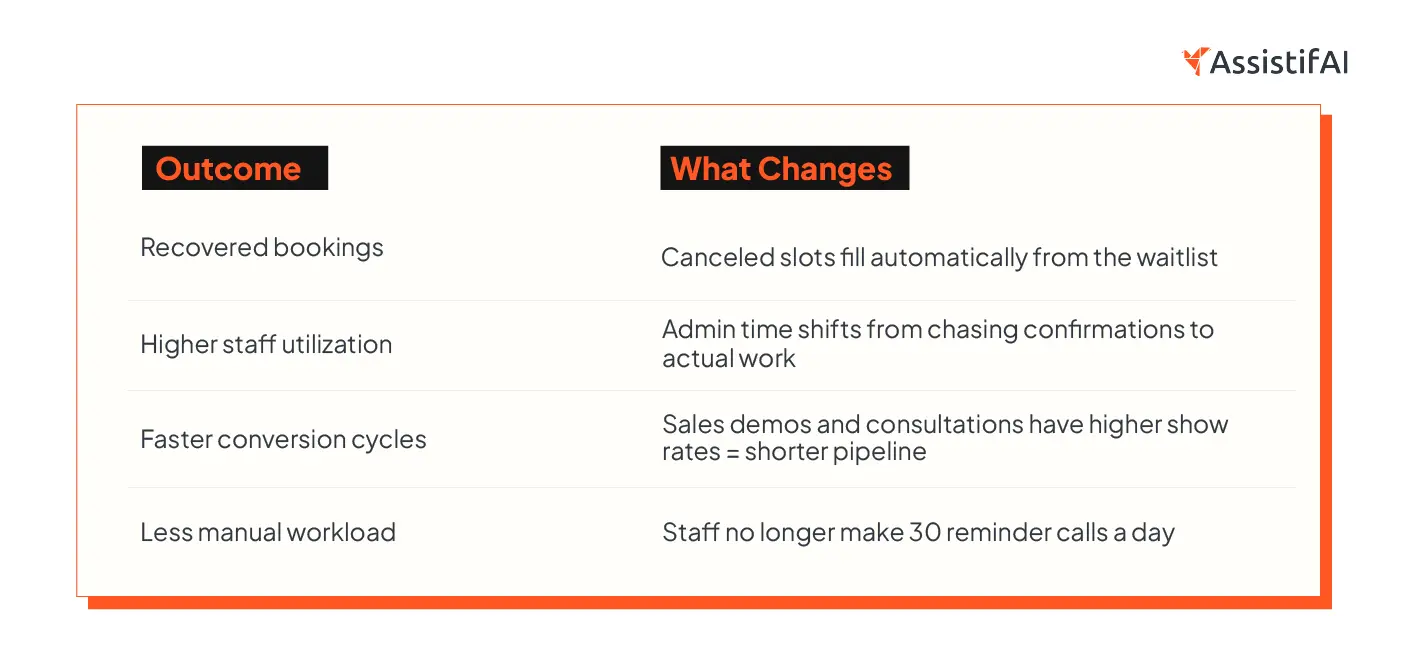
- Businesses using AI scheduling tools report 27–45% revenue growth on average.
- Clinics see a 3–5x return on investment, making the spend highly justifiable.
- Full payback typically happens within 10–18 months, not years.
- The scheduling software market is growing at a 16.2% CAGR, showing strong adoption.
- Market size is projected to reach $942 million by 2032, indicating where businesses are actively investing.
Businesses using AI scheduling tools report revenue increases of 27–45% on average (EarthWeb, 2023).
Where AI Scheduling Delivers the Highest ROI?
Any business where a missed appointment = lost revenue is the right candidate. Here's how the outcomes break down by context.
Healthcare and Clinics
- Average no-show rate: 19–23%.
- AI-driven outreach to high-risk patients lifts completion rates by 2–3x.
- Nurses spend up to 40% of their time on scheduling tasks, while AI cuts that significantly.
Service Businesses (Salons, Spas, Repair, Fitness)
- Early Monday slots see 15%+ no-shows.
- Weekend SMS alerts drop to a rate below 10%.
- Self-service rescheduling eliminates most ghosting behavior.
Sales Demos and Consultations
- A no-show here isn't just lost time; it's a stalled deal.
- Automated confirmations and reminder sequences keep prospects engaged without requiring SDR follow-up.
- Two-way SMS confirmation before a demo is increasingly standard in high-performing B2B sales teams.
Professional Services (Legal, Finance, Consulting)
- Legal firms lead AI adoption at 79%, partly driven by the cost of a missed billable hour.
- AI appointment booking bots handle intake scheduling 24/7, so prospects don't fall out of the funnel after hours.
AssistifAI: Turning Missed Appointments Into Captured Revenue
Most businesses shopping for AI scheduling software hit the same wall: they need a system first.
That's the gap AssistifAI was built to solve. A lot of SMBs and growing startups don't have an existing appointment infrastructure; they're running on WhatsApp threads, spreadsheets, or a booking link with zero follow-up baked in.
AssistifAI includes a built-in appointment system as a core feature. Admins can set business hours, manually book appointments as needed, and view all AI-booked slots in a single unified calendar. There's no separate tool to manage, no integration required on day one to get started.
Here's why that matters practically:
- You don't need to have Calendly or GCal set up already; AssistifAI handles scheduling natively.
- The AI books, confirms, and follow-ups are all visible in one admin view.
- Future integrations with Calendly, Google Calendar, and similar tools will allow the AI to work directly inside the systems businesses already use, so the transition is low-friction when you're ready to expand.
The mechanism is the same as described above: intelligent reminders, two-way confirmation, and slot recovery, except it runs through an AI that's already handling your customer conversations. The appointment system isn't an add-on. It's part of the workflow.
No Workflow Overhaul Required: How AI Fits Into Your Existing Stack
No workflow updation is needed. The whole point is that it fits around what you already do.
One of the most common myths about businesses delaying the adoption of AI scheduling is that it requires rebuilding their operations.
No. It doesn't.
AssistifAI connects with the channels your clients already use: WhatsApp, SMS, email, and surfaces everything in a single admin calendar. Your team doesn't need to change its workflow. The AI works inside it.
- No new software for clients to download
- No retraining your front desk on a new system
- Appointment data flows into your existing view
- Future CRM and calendar integrations will make this even more plug-and-play
Businesses that delay implementation lose no-show revenue each week as they wait for the "right moment" to start. There isn't one. The setup is fast. The payback is faster.
What Should You Track From Day One to Measure ROI?
Gut feel is not a KPI. Here's what to actually measure.
If you're not tracking these from the start, you won't know what's working or how much money you've recovered.
Start with your current no-show rate. If you don't know it, calculate it: total no-shows ÷ total appointments × 100. For most SMBs, this number is between 15% and 30%. That's your baseline. Everything else is an improvement on top of it.
From Missed Appointments to Predictable Revenue
No-shows are not inevitable. They are the predictable result of a communication gap between booking and attendance.
An AI appointment reminder system automatically closes that huge gap.
The businesses winning on scheduling right now aren't doing anything complicated. They automated reminders across the right channels, gave clients a frictionless path to reschedule, and built in a system to recover canceled slots.
That's it.
Revenue comes not only from growth hacking but also from not losing money already booked.
If your no-show rate is above 10%, you're losing revenue that should already be yours.
AssistifAI handles the full appointment lifecycle from AI-powered booking to automated follow-up in a single system built for businesses that don't have time to babysit their calendars.
Start recovering missed revenue today.
FAQ
What is AI appointment scheduling software, and how does it work?
AI appointment scheduling software automates the full appointment lifecycle, including booking, confirmation, reminders, rescheduling, and slot recovery, without the need for manual staff. It uses behavioral data and channel optimization to send reminders at the right time through the right medium, and then automatically fills canceled slots from a waitlist.
How much can AI scheduling software reduce no-show rates?
Businesses using automated multi-channel reminders (SMS + email) report no-show reductions of 39–60%, with some achieving show rates as high as 90%. The actual reduction depends on your current no-show rate, the timing of reminders, and whether self-service rescheduling is enabled.
What is an AI appointment reminder system?
An AI appointment reminder system automatically sends personalized reminders to clients before their scheduled appointments via SMS, email, or other preferred channels at optimal intervals (typically 48 and 24 hours prior). Unlike static reminder tools, AI systems adapt timing and channel based on client behavior and past response patterns.
How does an AI appointment booking bot handle rescheduling?
An AI appointment-booking bot sends a rescheduling link with every reminder. When a client clicks it, they see live availability and can pick a new slot without calling or emailing. The original slot immediately opens for another booking. This removes the friction that causes most clients to simply not show up rather than reschedule.
Is AI appointment scheduling software suitable for small businesses?
Yes. AI appointment scheduling software delivers greater impact for small businesses than for large ones, because every no-show represents a higher percentage of their daily revenue. Modern tools are built for non-technical users, require no complex setup, and start paying back within weeks. The average SMB with two daily no-shows loses $50,000+ annually; that's the baseline problem being solved.
What integrations should I look for in an AI appointment scheduler?
The most important integrations are your communication channels (SMS, WhatsApp, email), calendar tools (Google Calendar, Outlook, Calendly), and CRM. For businesses without an existing scheduling system, look for tools that include a native appointment calendar, so you're not dependent on external integrations to get started. AssistifAI, for example, includes a built-in scheduling system with admin controls and a unified calendar view, with external calendar integrations on the roadmap.

Read More Blogs

Your next hire isn't human.


AssistifAI automates your workflows and delivers exceptional voice and chat-based customer support helping your business grow faster, save time, impress clients, and stay ahead of the competition.