
Best AI Chatbot for Customer Service in 2026: 8 Platforms Compared (With Pricing & Features)
Customer support costs keep rising. Resolution times don’t improve.
Most teams already use AI chatbots. Yet tickets still pile up, follow-ups don’t stop, and agents stay overloaded.
The problem is simple. These tools answer questions, but they don’t resolve issues.
That gap shows up everywhere. More escalations. Longer SLAs. Higher support costs.
If your chatbot still hands work back to your team, it isn’t automation. It’s deflection.
Which AI Chatbots Actually Reduce Support Workload in 2026?
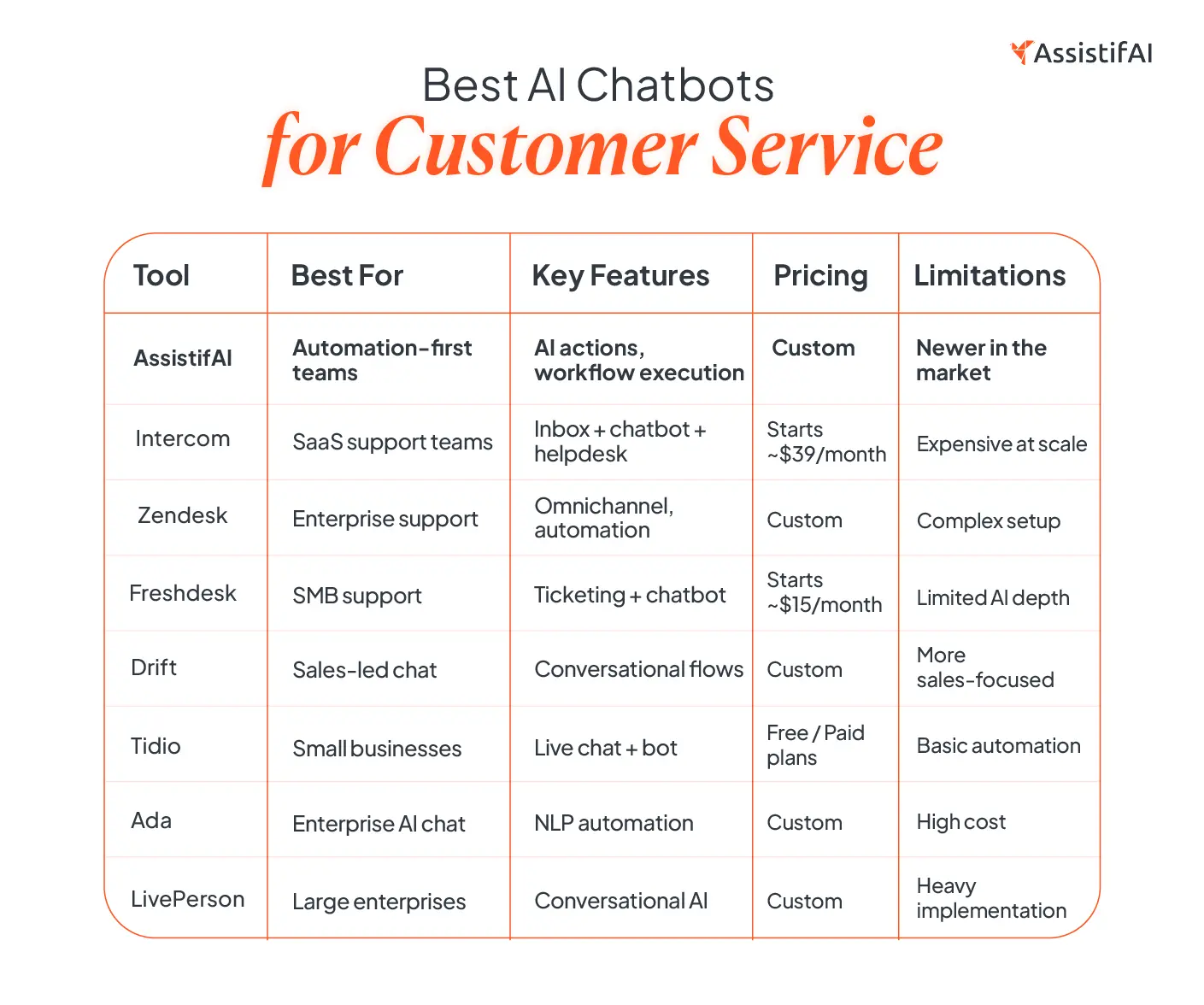
Top AI Chatbots for Customer Service (Detailed Breakdown)
1. AssistifAI
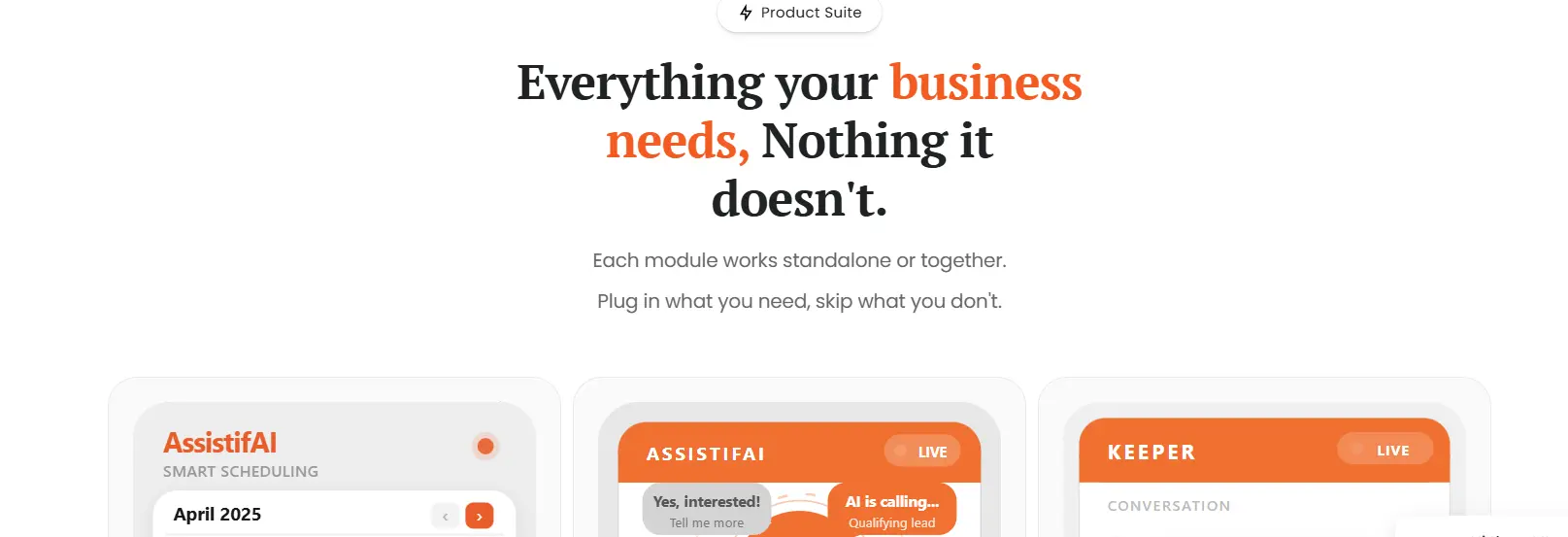
Best for: Teams that want AI to execute support tasks, not just respond.
Key features:
- Automates support workflows end-to-end
- Handles follow-ups, reminders, and customer nudges automatically
- Integrates with backend systems to take real actions (not just reply)
- Consolidates the entire customer journey—from first conversation to final booking, from reminder calls to follow-up surveys, from flagged issues to human escalation when needed
- Maintains full context across every channel so conversations never reset or fragment
- Provides a unified dashboard where businesses manage the entire customer lifecycle while the AI operates continuously in the background
Pricing: Custom
Limitations:
- Still a growing ecosystem
- Requires initial setup to map workflows and business logic
Why it stands out:
Most AI chatbots are still built around a narrow idea of “conversation.” They respond, suggest, or deflect.
AssistifAI is built on a different thesis entirely: fragmentation is the real problem.
Today, most businesses are forced to juggle 5–7 disconnected tools just to manage the customer journey—chatbots, CRMs, ticketing systems, booking tools, follow-up software, and analytics dashboards. The result is broken context, missed handoffs, and a disjointed customer experience.
AssistifAI removes that fragmentation by acting as a single autonomous layer across the entire journey. The customer never has to leave the conversation. The business never has to leave the dashboard. And the AI never loses context—regardless of channel, touchpoint, or stage in the funnel.
This shifts the real question from “which chatbot is best?” to something more fundamental.
Do you want a chatbot or an AI workforce that actually runs customer operations end-to-end?
2. Intercom
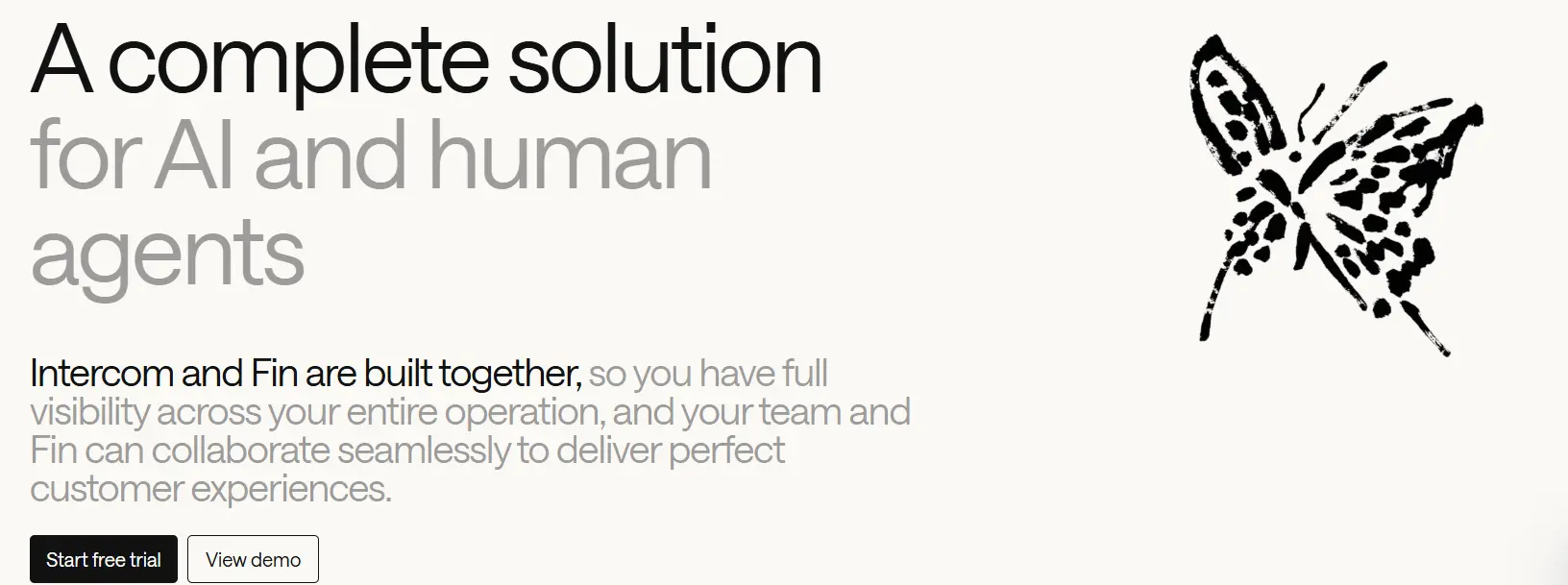
Best for: SaaS companies managing high chat volume.
Key features:
- Unified inbox + chatbot
- Knowledge base integration
- AI-assisted replies
Pricing: Starts around $39/month
Limitations:
- Costs increase quickly
- Automation depth is limited
Where it falls short:
Strong UI. Weak execution beyond chat.
3. Zendesk
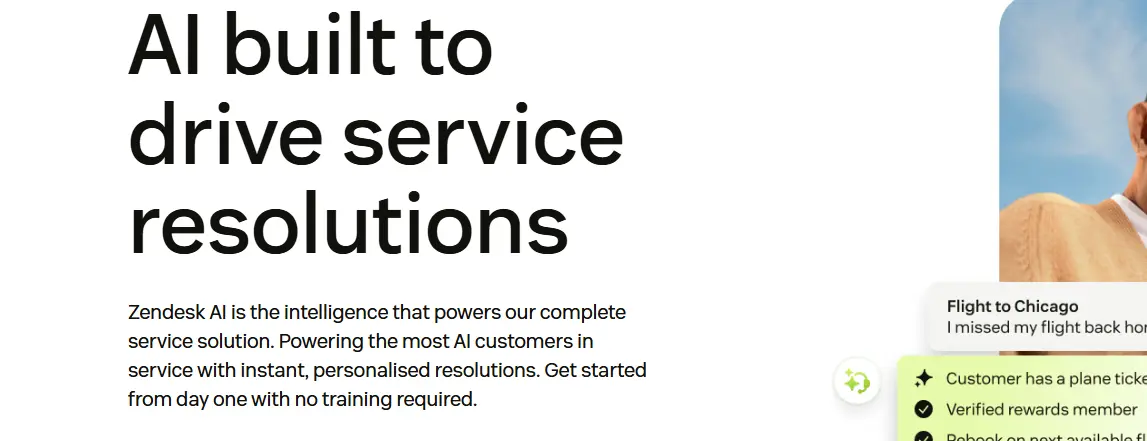
Best for: Enterprises with complex support operations.
Key features:
- Omnichannel support
- AI automation workflows
- Advanced ticketing
Pricing: Custom
Limitations:
- Complex to implement
- Expensive
Where it falls short:
Powerful, but heavy and slow to adapt.
4. Freshdesk
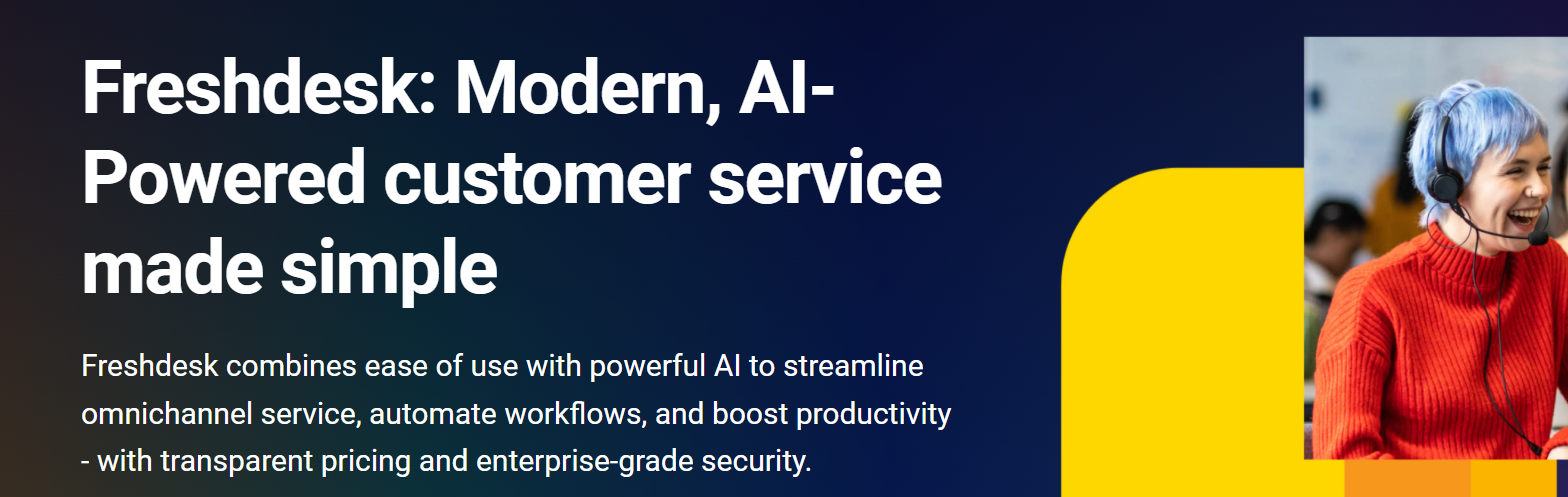
Best for: SMBs starting with support automation.
Key features:
- Ticketing + chatbot
- Email and chat support
- Basic automation
Pricing: Starts around $15/month
Limitations:
- Limited AI capability
- More rule-based than intelligent
Where it falls short:
Good entry tool. Not built for deep automation.
5. Drift
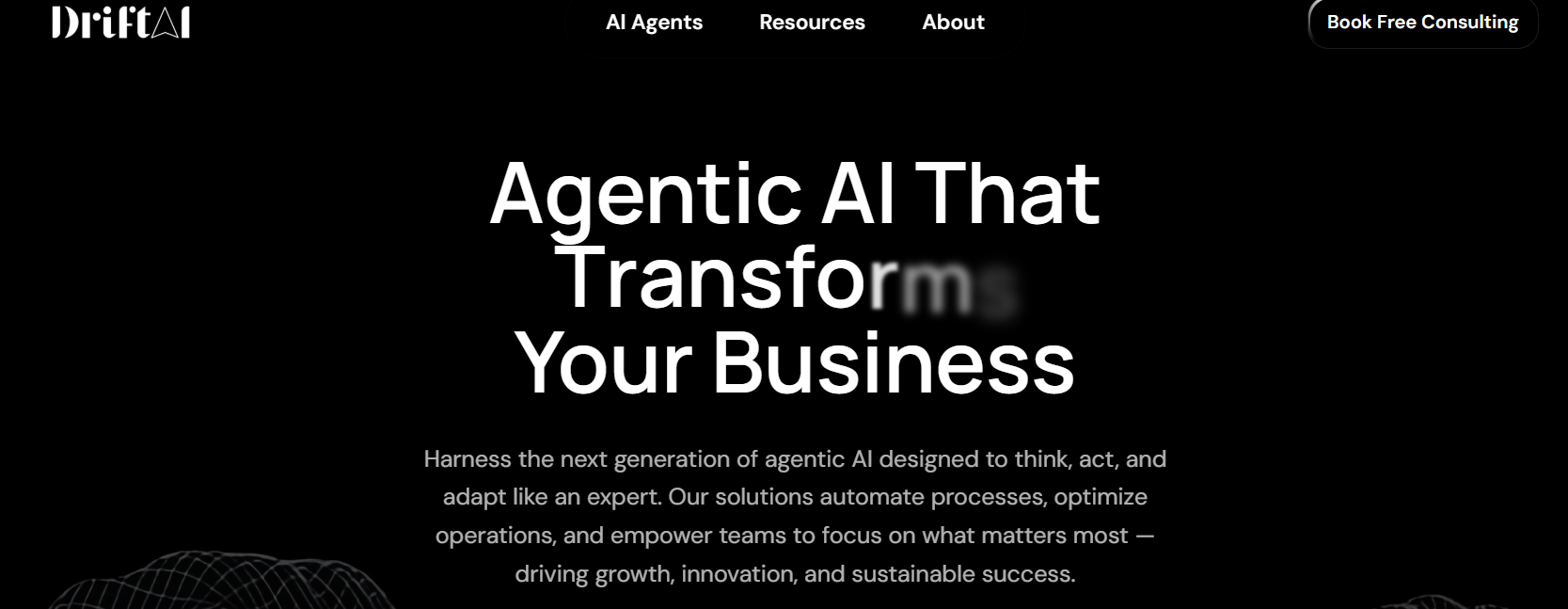
Best for: Sales-led support teams.
Key features:
- Conversational chat flows
- Lead qualification
- Meeting booking
Pricing: Custom
Limitations:
- Focuses more on sales than support
- Limited support automation
Where it falls short:
Strong for the pipeline. Weak for support resolution.
6. Tidio
Best for: Small businesses and startups.
Key features:
- Live chat + chatbot
- Easy setup
- Prebuilt templates
Pricing: Free plan + paid tiers
Limitations:
- Basic automation
- Limited scalability
Where it falls short:
Simple. But not built for complex support.
7. Ada
Best for: Large enterprises scaling support.
Key features:
- NLP-based automation
- Multi-language support
- Enterprise integrations
Pricing: Custom
Limitations:
- Expensive
- Requires training
Where it falls short:
Powerful, but high-effort and high-cost.
8. LivePerson
Best for: Enterprises handling massive volumes.
Key features:
- Conversational AI platform
- Messaging automation
- Analytics
Pricing: Custom
Limitations:
- Heavy implementation
- Long deployment cycles
Where it falls short:
Enterprise-grade, but slow and complex.
How to Choose an AI Chatbot That Actually Resolves Issues?
The best AI chatbot is the one that resolves issues without requiring human follow-up.
What to look for:
- Can it execute workflows or just respond?
- Does it reduce tickets, not just deflect them?
- Can it integrate with your systems?
- Does it complete tasks end-to-end?
If the answer is no, it’s not solving your problem.
Why Most Tools Stop at Chat — and AssistifAI Doesn’t?
Most tools stop at conversation. AssistifAI completes the work.
Key differences:
- Executes workflows across systems.
- Resolves issues end-to-end.
- Removes manual follow-ups.
- Reduces support workload.
This is the shift. From answering to resolving.
Conclusion
Manychatbots address queries. They seldom resolve problems. If your staff still follows up on every chatbot exchange, nothing has shifted.
Rather than just conversion, you need execution to reduce support tickets and speed up problem-solving.
The top AI assistants for client support do not simply offer data. Linking these to underlying systems can automate tasks, resolve issues, and enable independent operation.
By providing immediate outcomes, this type of linkage reduces the burden on support groups and increases patron satisfaction.
What we need are bots capable of managing complete workflows, transactions, and live record modifications.
In a digital-first setting, it is vital to move from conversational agents to action-focused aids to meet client demands and improve operational efficiency.
AssistifAI is designed to completely erase that divide. It does not rest at your process—it becomes the process. From the initial message to the conclusion, from alerts to resolution, everything runs across one constant, SmartPlatform.
The transition is straightforward yet potent: Stop managing discussions. Begin directing results.
If you are earnest about cutting operational costs, enhancing the client journey, and expanding support without magnifying disorder, now is the moment to reconsider your deployment.
Book a demo to see how AssistifAI replaces fragmented tools with a unified AI workforce.

FAQs
What is the best AI customer service chatbot?
The best AI chatbot is one that resolves issues without human intervention. Tools like AssistifAI stand out because they execute workflows, not just respond.
How do AI customer service chatbots work?
AI chatbots use natural language processing to understand queries and respond. Advanced tools go further by integrating with systems to complete actions.
Can AI chatbots fully replace support agents?
Not completely. They handle repetitive tasks and common issues, allowing agents to focus on complex cases.
What features should I look for in an AI chatbot?
Look for workflow execution, system integration, automation depth, and the ability to resolve issues end-to-end.
Are AI chatbots only for large enterprises?
No. Many tools support SMBs, but advanced workflow execution is more common in enterprise-ready platforms.
How do AI chatbots reduce support workload?
They automate repetitive queries, reduce ticket volume, and handle tasks without requiring manual follow-ups.
What is the difference between a chatbot and an AI agent?
A chatbot responds to queries. An AI agent can take actions, execute workflows, and resolve issues independently.
Read More Blogs

Your next hire isn't human.


AssistifAI automates your workflows and delivers exceptional voice and chat-based customer support helping your business grow faster, save time, impress clients, and stay ahead of the competition.