

AI-Powered Conversations: How Artificial Intelligence Chat Systems Provide Natural Responses
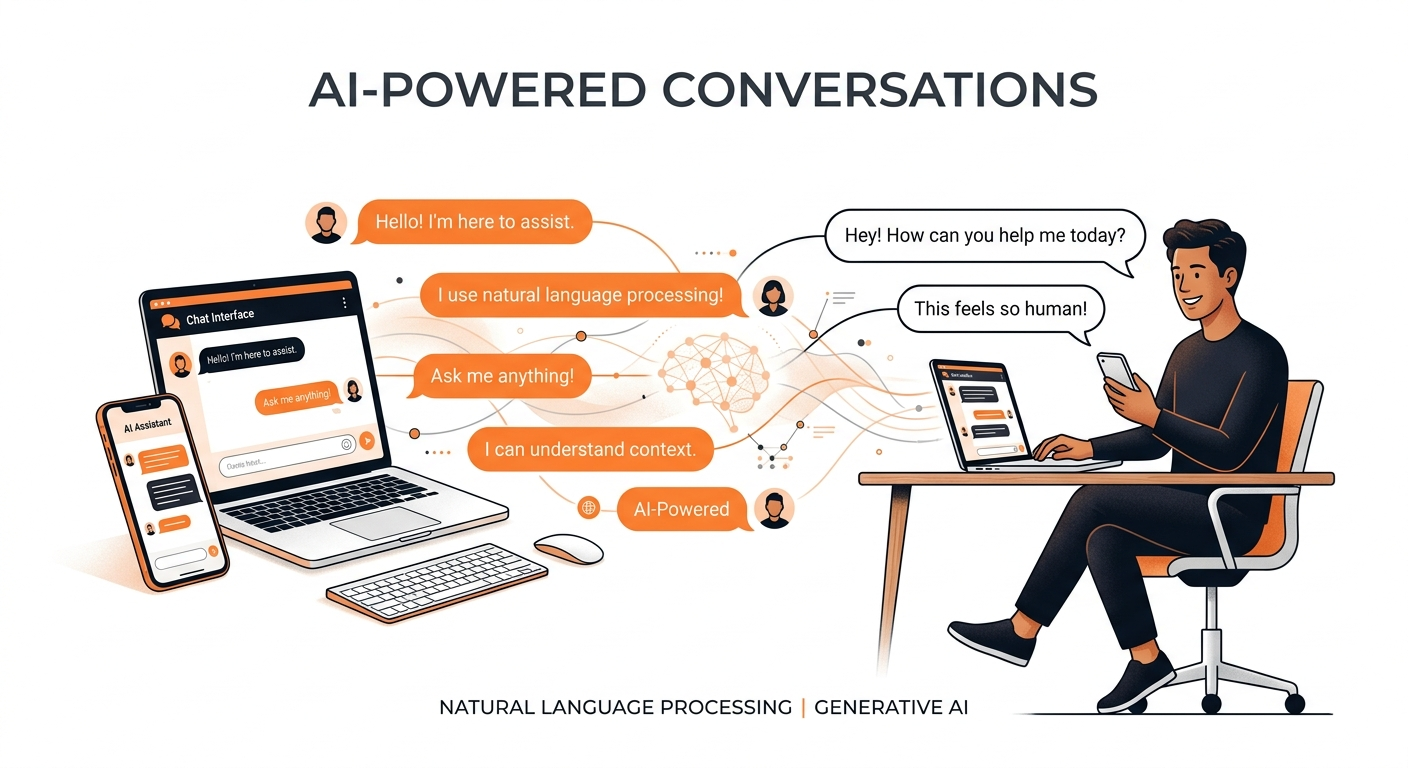
Imagine asking a question online and receiving a response so natural you’d think a human typed it. This is the reality of modern Artificial Intelligence chat systems, where natural language processing (NLP) and generative AI work together to mimic human speech.
These systems analyze context, understand intent, and craft replies that feel authentic, reshaping how businesses and customers communicate in real time.
Key Takeaways
- How AI chatbots work: AI chatbots use NLP and machine learning to break down input, recognize intent, and generate accurate responses.
- Role of generative AI: Generative AI creates dynamic, human-like conversations beyond scripted responses.
- AI agents vs chatbots: AI agents go beyond text replies by executing tasks and offering personalized automation.
- Business applications: Companies like AssistifAI use AI chat to automate support, scheduling, sales, and logistics.
- Future of AI chat: Trends such as multimodal AI, emotion recognition, and hyper-personalization are shaping the next wave.
The Evolution of AI Chatbots
AI chatbots have come a long way from simple rule-based systems to today’s highly intelligent, generative AI-powered assistants. The journey includes:
- Early Rule-Based Chatbots: Systems like ELIZA and ALICE used predefined scripts with no real understanding of human language.
- Machine Learning-Powered Chatbots: Bots like IBM Watson began using machine learning and data-driven responses.
- Modern Generative AI Chatbots: Platforms such as ChatGPT and DeepAI now leverage large language models (LLMs) to create human-like conversations dynamically.
Understanding AI Chatbots and Natural Language Processing
At the core of every AI chatbot lies natural language processing (NLP). This field of artificial intelligence enables machines to understand, interpret, and generate human language. NLP involves several subfields, including syntax analysis, sentiment detection, and contextual understanding.
When you type a message into a chatbot, here’s what happens behind the scenes:
- Tokenization: The chatbot breaks down the input text into smaller pieces, like words or phrases.
- Intent Recognition: It determines the intent behind your words using machine learning models.
- Context Understanding: Advanced bots like ChatGPT analyze previous interactions to provide relevant responses.
- Response Generation: Using generative AI, the chatbot crafts a human-like reply.
- Continuous Learning: AI-powered systems, including OpenAI’s models, learn from every interaction, improving over time.
How AI Chat Enhances User Experience
AI chatbots are transforming user interactions by:
- Personalization: Using past interactions to tailor responses.
- Sentiment Analysis: Adjusting tone and responses based on the user’s emotions.
- Adaptive Learning: Improving over time to provide better support.
The Role of Generative AI in Providing Natural Responses
One of the most revolutionary aspects of Artificial Intelligence chat systems is their use of generative AI. Unlike traditional rule-based bots, generative models create responses dynamically instead of following pre-programmed scripts.
- ChatGPT, a product of OpenAI, is an example of this technology. It uses transformer-based deep learning architectures to generate coherent and contextually accurate responses.
- Julius AI and DeepAI leverage similar models, allowing their bots to engage users in meaningful, dynamic conversations.
- Agentforce integrates AI agents that provide more personalized, context-aware interactions.
- DeepSeek integrates AI agents through a Mixture of Experts architecture, enabling efficient, task-specific processing for enhanced performance and adaptability.
This ability to generate responses on the fly allows chatbots to sound more natural, respond creatively, and even handle ambiguous questions better than earlier AI models.
AI Chatbot vs AI Virtual Assistant
While AI chatbots handle text-based interactions, AI virtual assistants like Alexa and Siri use voice processing. The main differences are:
- Chatbots focus on text-based, predefined conversational flows.
- Virtual Assistants use conversational AI combined with voice recognition to execute tasks.
- AI Agents offer more autonomous decision-making and action execution.
AI Agents: The Next Step in Conversational AI
While AI chatbots handle text-based interactions, AI agents go a step further by combining conversational AI with task automation. These advanced systems don’t just respond to queries—they execute actions based on user requests.
For example:
- A chatbot using Agentforce might not only answer customer inquiries but also book appointments or process transactions.
- AI agents within platforms like Julius AI can analyze customer behavior to provide tailored product recommendations.
- DeepAI integrates machine learning models that adapt to user preferences, making interactions feel even more personalized.
Challenges & Ethical Concerns in AI Chat
Despite their benefits, AI chat systems face challenges such as:
- AI Bias: Bots may develop biases based on training data.
- Misinformation: AI-generated responses may not always be accurate.
- Data Privacy: Ensuring that user conversations are secure and confidential.
How AssistifAI is Transforming Businesses with AI Chat Systems
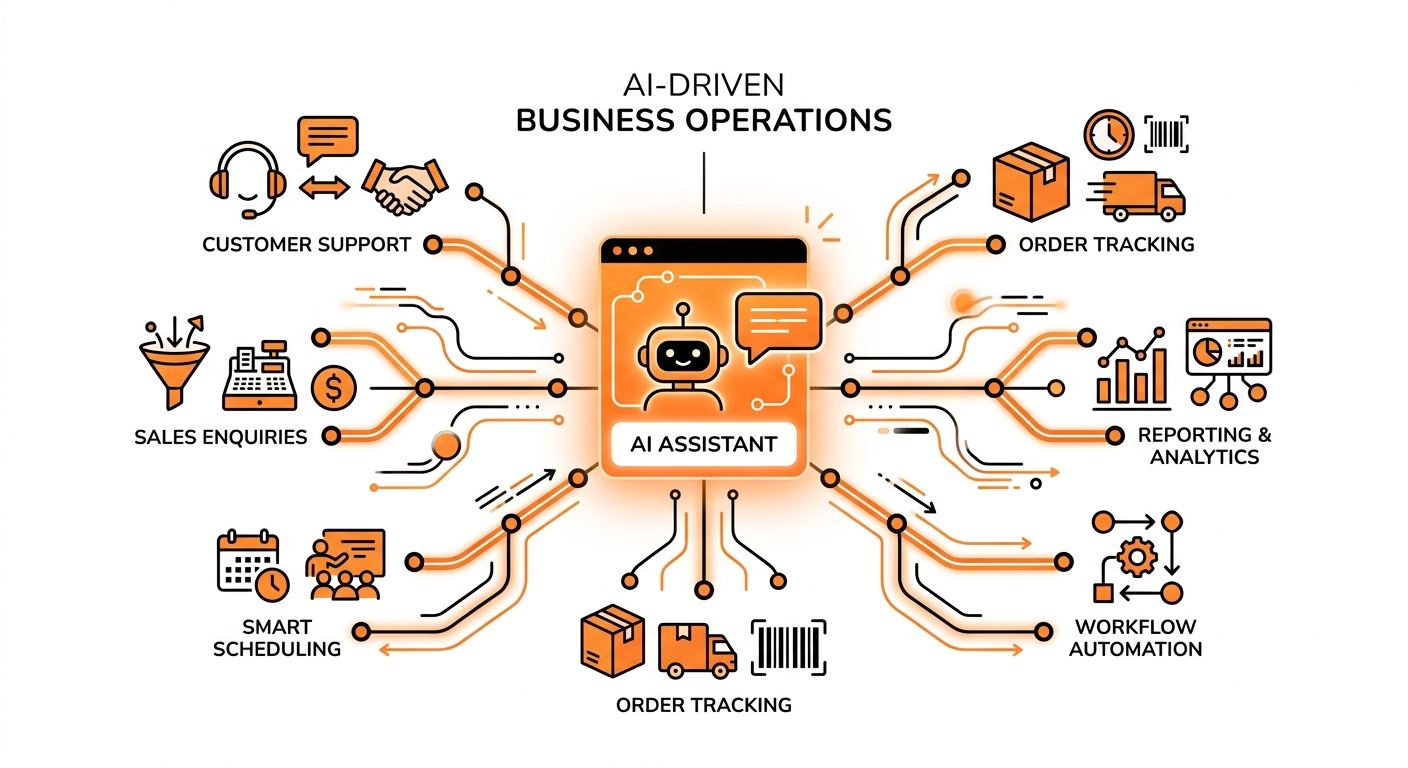
One company making significant strides in this space is AssistifAI By leveraging AI-powered chatbots and AI agents, AssistifAI helps businesses automate customer support, scheduling, and order tracking. Their intelligent chat solutions integrate seamlessly into websites and applications, ensuring businesses can provide instant, 24/7 customer service while reducing operational costs.
Whether it’s a small e-commerce store or a large enterprise, AssistifAI’s natural language processing (NLP) capabilities ensure that responses are both accurate and engaging, enhancing the overall customer experience. Businesses across various industries are experiencing remarkable growth with AssistifAI’s solutions. Retailers use its AI chatbots to handle customer inquiries, recommend products, and streamline order management.
Service-based businesses utilize its scheduling capabilities to automate appointment bookings, while logistics companies rely on AI-driven tracking solutions for seamless order updates. As AI technology continues to evolve, AssistifAI remains at the forefront, helping businesses harness the power of Artificial Intelligence chat to scale operations and enhance customer interactions.
The Future of Artificial Intelligence Chat Systems
The landscape of Artificial Intelligence chat is constantly evolving, with significant improvements in how AI understands and generates language. Some future trends include:
- Emotion Recognition: AI models are being trained to detect user emotions and adjust their tone accordingly.
- Multimodal AI: Beyond text, chatbots will soon understand voice, images, and even video inputs.
- Hyper-Personalization: By integrating AI with vast user data, future chatbots will deliver responses tailored to individual preferences.
With major advancements in natural language processing, generative AI, and machine learning, the gap between human and AI communication is narrowing.
Conclusion
Artificial Intelligence chat systems have come a long way from simple rule-based bots to sophisticated AI agents powered by generative AI. Platforms like ChatGPT, Agentforce, DeepAI, and Julius AI are leading the way in creating seamless, human-like digital interactions. As AI continues to evolve, we can expect chatbots to become even more intuitive, responsive, and emotionally aware.
Are you ready to leverage AI-powered conversations for your business? Whether it’s customer support, sales, or personal assistants, AI chat systems are transforming how we communicate in the digital world.
Frequently Asked Questions (FAQs)
1. What is the difference between AI chatbots and AI agents?
AI chatbots handle text-based interactions, while AI agents automate tasks and make autonomous decisions.
2. How do AI chatbots learn from conversations?
They use machine learning and natural language processing (NLP) to analyze patterns, improve responses, and adapt over time.
3. Are AI chatbots replacing human customer service?
Not entirely—AI chatbots enhance efficiency but still require human oversight for complex issues.
4. Can AI chat systems understand emotions?
With sentiment analysis, AI chatbots can detect and respond to emotional cues, though full emotional intelligence is still evolving.
5. How do businesses measure the success of AI chatbots?
Metrics include response time, customer satisfaction scores, and task completion rates.
Blog Acknowledgement
This blog was created through a structured and collaborative process. The initial concept and direction were envisioned by Sarbani Mukherjee, ensuring the content aligned with the overall theme and audience needs. The first draft was developed with the assistance of advanced AI writing tools, including ChatGPT and Google Gemini, which provided speed and depth in drafting. To ensure accuracy, readability, and search performance, the Assistifai content team carried out final editorial reviews, SEO optimization, and refinements, transforming the draft into a polished piece designed to inform, engage, and add value to readers.
Read More Blogs

Your next hire isn't human.


AssistifAI automates your workflows and delivers exceptional voice and chat-based customer support helping your business grow faster, save time, impress clients, and stay ahead of the competition.